Classic butter shortbread cookies
Buttery, crisp shortbread cookies from just butter, sugar, flour and salt. About 24 cookies, with tips for cut-outs, wedges, slice-and-bake and freezing.
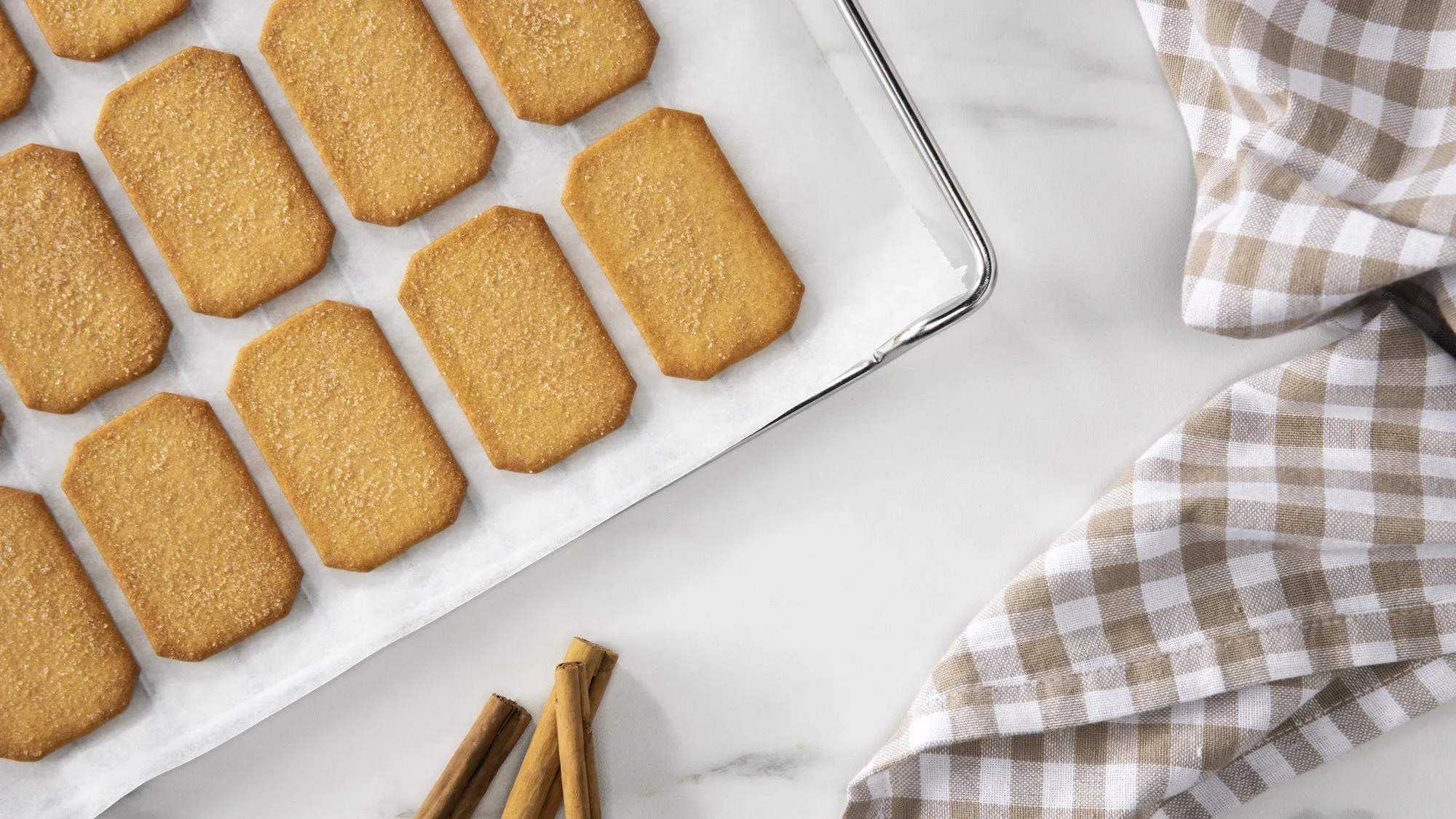
Shortbread is the simplest butter cookie there is: butter, sugar, flour and a pinch of salt, baked low until crisp at the edges and tender in the middle. With no eggs and no leavening, the flavor is all butter, so it’s worth using a good one. This recipe makes about 24 cookies and is a classic for holiday tins and gift boxes.
Key takeaways
- Classic shortbread follows a 3:2:1 ratio by weight: three parts flour, two parts butter, one part sugar.
- Measure the flour by weight (330 g) or spoon it into the cup and level it. Too much flour makes crumbly, dry cookies.
- Mix only until the dough comes together, then chill it for 30 minutes so the cookies hold their shape.
- Bake at 325°F for 15 to 18 minutes and take them out while the centers are still pale.
Why this recipe works
Shortbread gets its name from “shortening” in the old sense: a high proportion of fat that coats the flour and keeps gluten from forming long, chewy strands. That’s what gives the cookies their sandy, melt-in-your-mouth texture.
A low oven temperature matters just as much. At 325°F the cookies bake through and crisp up before the outside browns, so they stay pale and buttery rather than toasty. Because there are no eggs or leaveners, they barely spread or rise, which makes the dough ideal for cut-outs and stamped designs.
Ingredient notes
Butter. Use unsalted butter, softened until you can press a fingertip into it but still cool and holding its shape. Melted or very soft butter makes greasy cookies that spread.
Sugar. Granulated sugar gives a slightly crisp, classic bite. For an even more tender, finer crumb, swap it for 3/4 cup (90 g) of powdered sugar.
Flour. All-purpose flour is all you need. Weigh it if you can; it’s the single biggest factor in the texture.
Salt. Just 1/2 teaspoon balances the sweetness and makes the butter taste richer. If you only have salted butter, leave the added salt out.
Tips for tender, crisp shortbread
Don’t overwork the dough
Stop mixing as soon as the flour disappears and the dough holds together when you squeeze it. Kneading or mixing longer develops gluten and makes the cookies hard instead of tender.
The dough will look crumbly at first. That’s normal. Press it together with your hands rather than mixing it more.
Roll between parchment
Rolling the dough between two sheets of parchment means you don’t need extra flour on the counter, which can dry out the cookies. If the dough cracks, let it sit at room temperature for a few minutes and press the cracks together. If it turns soft and sticky, chill it briefly before cutting.
Watch the color, not just the clock
Shortbread should stay pale in the middle, with just a hint of gold at the edges. Start checking at 15 minutes, especially for small or thin cookies. The cookies feel soft when they first come out of the oven and crisp up as they cool on the sheet.
Shapes and variations
- Wedges (petticoat tails): press the dough evenly into a 9-inch round cake pan, prick it all over with a fork, and score it into 12 to 16 wedges. Bake at 325°F for about 30 to 35 minutes, until the edges are lightly golden, then cut along the score lines while it’s still warm.
- Slice-and-bake: shape the dough into a 2-inch log, wrap it and chill until firm (at least 2 hours), then slice into 1/4-inch rounds and bake as above.
- Citrus: beat the finely grated zest of 1 lemon or orange into the butter and sugar.
- Almond: use 1/2 teaspoon of almond extract in place of the vanilla.
- Nuts: fold in up to 1/2 cup of finely chopped toasted pecans or almonds after adding the flour.
- Chocolate: dip the cooled cookies halfway into melted chocolate and let them set on parchment.
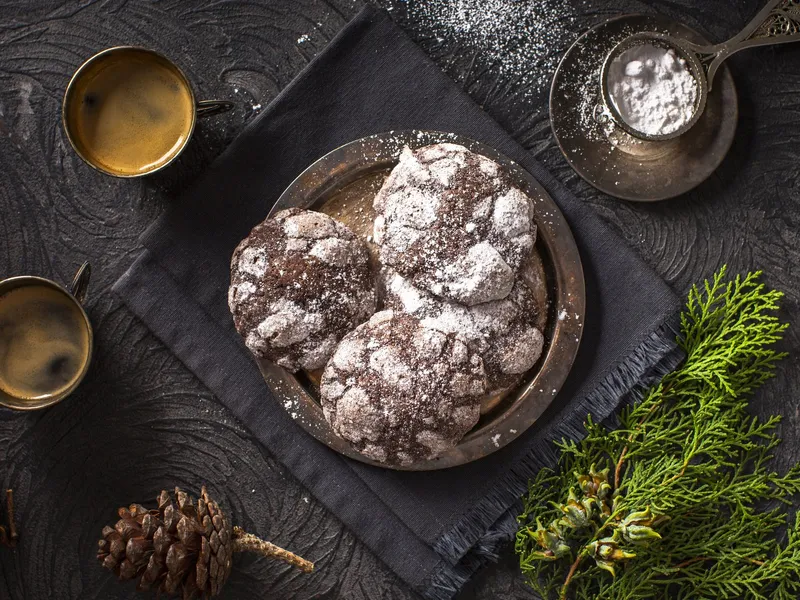
Keep mix-ins modest so the dough still rolls and cuts cleanly. For a softer, chocolatey holiday cookie to go alongside, try these chocolate crinkle cookies.
How to store and freeze
Room temperature: let the cookies cool completely, then keep them in an airtight container for up to 1 week. Layer them with parchment to protect the edges. Warmth or moisture softens them, so store them away from the stove.
Re-crisping: if the cookies soften, spread them on a baking sheet and warm them at 300°F for 4 to 5 minutes. Let them cool fully before packing them away.
Freezing dough: wrap the dough disk or log tightly and freeze it in a freezer bag for up to 2 months. Thaw it in the fridge before rolling or slicing.
Freezing baked cookies: pack the cooled cookies in a sturdy airtight container with parchment between the layers and freeze for up to 3 months. Thaw them in the closed container so any condensation forms on the outside, not on the cookies.
Frequently asked questions
What is the 3:2:1 rule for shortbread?
It’s the classic shortbread ratio by weight: three parts flour, two parts butter, one part sugar. For example, 12 ounces of flour, 8 ounces of butter and 4 ounces of sugar.
Why is my shortbread crumbly and dry?
Usually there’s too much flour, often from scooping it straight from the bag with the measuring cup. Weigh the flour or spoon it into the cup and level it.
Why did my shortbread turn hard?
The dough was overmixed or the cookies were overbaked. Mix only until the dough comes together, and take the cookies out while the centers are still pale.
Can you make shortbread dough ahead?
Yes. Wrapped dough keeps in the fridge for up to 3 days or in the freezer for up to 2 months. Let it soften slightly before rolling.
How do you keep shortbread from spreading?
Use butter that’s softened but still cool, chill the dough before rolling, and chill the cut cookies again if they’ve turned soft before they go into the oven.
Recipe
Classic butter shortbread cookies
- Prep
- 20 min
- Cook
- 18 min
- Total
- 1 hr 20 min
- Makes
- About 24 cookies
Ingredients
- 1 cup (227 g, 2 sticks) unsalted butter, softened but still cool
- 1/2 cup (100 g) granulated sugar
- 1/2 teaspoon fine salt
- 1 teaspoon vanilla extract (optional)
- 2 3/4 cups (330 g) all-purpose flour
Method
- 1 In a large bowl, beat the butter and sugar for 1 to 2 minutes, until smooth and creamy. Mix in the salt and the vanilla, if using.
- 2 Add the flour in two or three additions, mixing on low speed or stirring by hand just until the dough forms soft clumps and no dry flour remains.
- 3 Press the clumps together into a disk, wrap it and refrigerate for 30 minutes.
- 4 Heat the oven to 325°F (165°C) and line two baking sheets with parchment paper.
- 5 Roll the chilled dough between two sheets of parchment to about 1/4 inch (6 mm) thick. Cut into shapes about 2 1/2 inches across and arrange them on the baking sheets, about 1 inch apart. Re-roll the scraps once.
- 6 If the cut cookies feel soft, chill them on the sheets for 10 minutes.
- 7 Bake for 15 to 18 minutes, swapping the sheets halfway through, until the edges are lightly golden and the centers are still pale.
- 8 Let the cookies cool on the sheets for 10 minutes, then move them to a wire rack to cool completely.
Notes
- The total time includes 30 minutes of chilling and 10 minutes of cooling on the sheet.
- Keeps in an airtight container at room temperature for up to 1 week.
- Freeze the wrapped dough for up to 2 months, or the baked cookies for up to 3 months.