Edible cookie dough (egg-free, made with heat-treated flour)
Egg-free edible cookie dough made with store-bought heat-treated flour, plus what the FDA and CDC say about raw flour and the safer options.
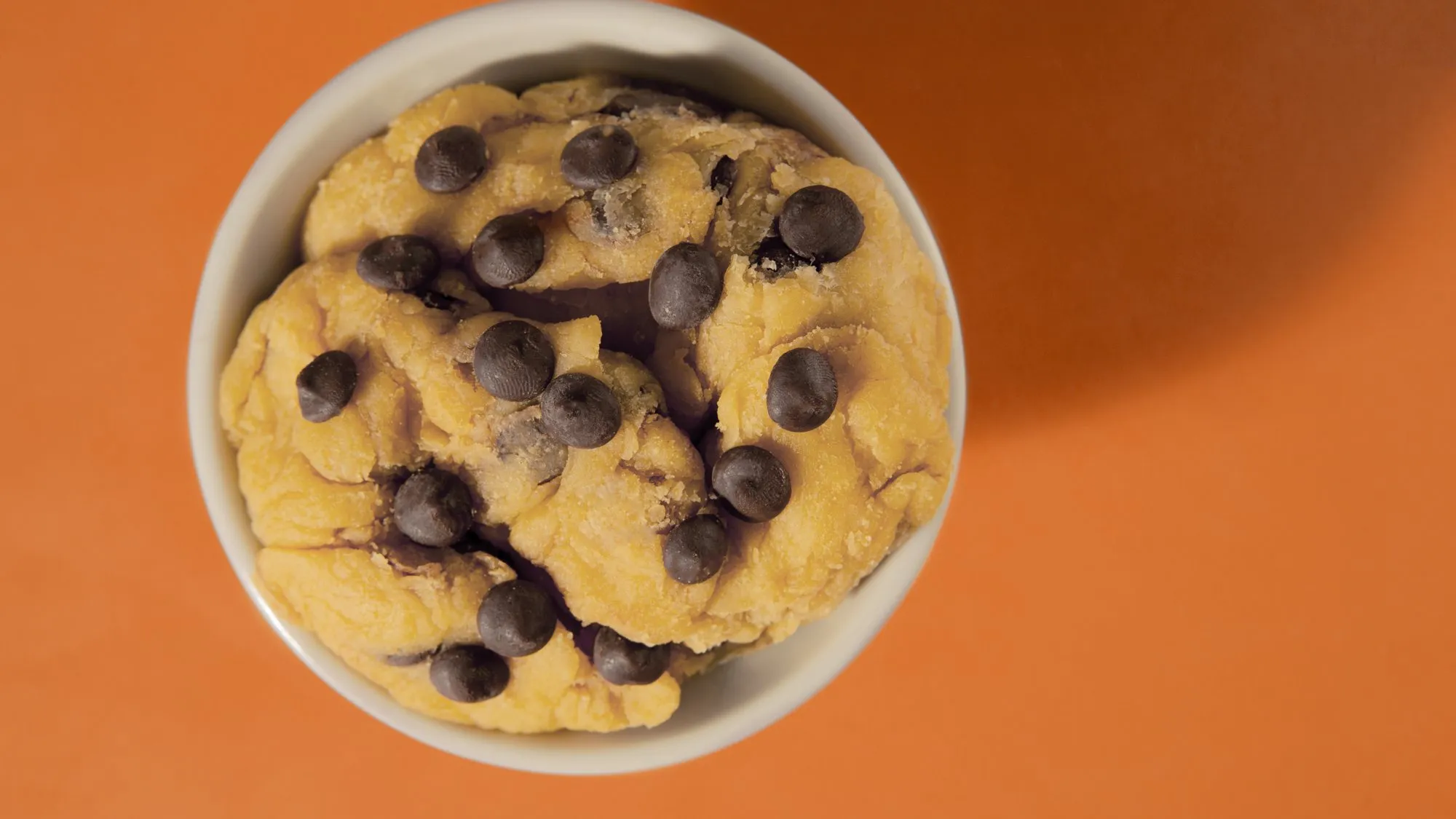
This is a spoonable chocolate chip cookie dough with no raw egg, made with flour that was heat-treated by the manufacturer. It has the brown-sugar flavor of classic cookie dough and takes about 10 minutes.
The flour is the part that matters most for safety, so read the section on raw flour below before you start.
Key takeaways
- This dough has no egg, and it calls for flour sold as heat-treated. Don’t swap in regular flour.
- Most flour is raw. The CDC says germs in flour are killed only when it is baked or cooked.
- The FDA says not to heat-treat flour at home, because home treatments may not kill all bacteria.
- The safe options are flour sold as heat-treated, or ready-made edible dough labeled safe to eat raw.
- Refrigerate the dough and keep it for 3 to 4 days.
Why raw flour is a food-safety issue
Most flour is raw. The CDC explains that flour hasn’t been treated to kill germs such as E. coli and Salmonella, and that steps like grinding and bleaching don’t remove them. Those germs can contaminate grain in the field or flour while it is being made. The CDC’s raw flour and dough page says tasting or eating raw dough or batter can put you at risk for food poisoning, and that germs are killed only when flour is baked or cooked. It also notes that raw and lightly cooked eggs can contain Salmonella, which is why this recipe leaves eggs out.
On heating flour at home, the FDA is direct: “DO NOT try to heat treat flour in your own home. Home treatments of flour may not effectively kill all bacteria and do not make it safe to eat raw.” Michigan State University’s food-safety researchers agree that oven and microwave methods are inconsistent, and that Salmonella is especially heat-resistant in low-moisture foods like flour.
The safe options
- Use flour sold as heat-treated. The manufacturer processes it to eliminate harmful germs. Check that the label says so, and buy it only from a source that labels it that way. Michigan State University notes it isn’t widely available to home cooks, so you may need to look beyond the baking aisle.
- Buy ready-made edible dough. The CDC notes that some companies make edible cookie dough with heat-treated flour and either no eggs or pasteurized eggs. Read the label to make sure the dough is meant to be eaten without baking.
- Bake the dough. If you want warm cookies, use a regular cookie recipe and follow its oven temperature and time.
If you can’t find heat-treated flour, don’t use regular flour in this recipe. Make baked cookies instead, such as peanut butter cookies or any other cookie that goes in the oven.
Don’t let young children eat or play with dough made with flour that hasn’t been commercially heat-treated. The CDC advises against it.
Ingredient notes
Heat-treated flour. Use a flour whose label says it has been heat-treated for eating raw. Measure it by weight (120 g) or spoon it into the cup and level it off. Sift it first if it has clumps.
Butter. Softened butter should leave a dent when pressed but still feel cool. If it’s too cold, the dough turns lumpy. If it’s melted, it turns greasy.
Brown sugar. Light brown sugar gives the classic caramel flavor. Use dark brown sugar for a deeper one.
Milk. Milk stands in for the egg’s moisture. Start with 1 tablespoon and add more by the teaspoon. The dough should hold together when pressed.
Chocolate chips. Mini chips distribute evenly through the dough. Use regular chips or chopped chocolate if you want larger pieces.
No leavening. There is no baking soda or baking powder in this dough. It’s made to be eaten as it is, so it won’t bake into the same cookie as a regular recipe.
Tips for the best texture
- Cream the butter and sugars well. One to two minutes of beating makes the dough smooth rather than gritty.
- Add the milk slowly. A teaspoon too much makes the dough sticky, and it’s easy to add more but hard to take it out.
- Chill if it’s too soft. Twenty minutes in the refrigerator firms it up for scooping.
- Let it soften before serving. Chilled dough is stiff. Leave a portion at room temperature for 10 to 15 minutes.
- Keep it clean. Wash bowls, spoons and counters after handling flour, and keep flour away from ready-to-eat foods, as the CDC advises.
Variations
Double chocolate. Replace 1 tablespoon of the heat-treated flour with 1 tablespoon of unsweetened cocoa powder.
Funfetti. Fold in 2 tablespoons of sprinkles at the end.
Peanut butter. Mix in 2 tablespoons of creamy peanut butter with the butter and sugars.
Small batch. For a single serving, use 2 tablespoons of heat-treated flour, 1 tablespoon of butter, 1 tablespoon of brown sugar, 1 teaspoon of granulated sugar, a pinch of salt, a drop of vanilla, 1 teaspoon of milk and 1 tablespoon of chocolate chips.
No dairy. Use dairy-free butter and plant-based milk. The texture will be a little different.
Serving ideas
Eat it by the spoonful, roll it into bite-size balls, or serve it alongside fruit or pretzels for dipping. For a dessert board, add a bowl of cream cheese frosting next to the dough bites.
Don’t mix homemade raw dough into ice cream or milkshakes. The CDC says to avoid adding raw homemade cookie dough to ice cream, and notes that the cookie dough in store-bought ice cream has been treated to kill harmful germs.
Storing and freezing
Refrigerator. Keep the dough in an airtight container for 3 to 4 days. Don’t leave it out for more than 2 hours (1 hour if the room is above 90°F), which is the USDA’s general limit for perishable food.
Freezer. Scoop the dough onto a parchment-lined tray, freeze until firm, then move the scoops to a freezer bag for up to 2 months. Thaw in the refrigerator or let a scoop soften briefly at room temperature before eating.
Frequently asked questions
Is edible cookie dough really safe to eat?
This recipe has no raw egg and uses commercially heat-treated flour, which is made to be eaten without baking. It is only as safe as that flour, so use a product labeled as heat-treated. Regular flour is raw, and the FDA says home treatments of flour do not make it safe to eat raw.
Can I heat-treat regular flour myself?
The FDA says not to. It warns that home treatments of flour may not effectively kill all bacteria and do not make it safe to eat raw. Use flour sold as heat-treated, or buy ready-made edible dough labeled safe to eat raw.
Can I bake this dough into cookies?
It isn’t designed to be baked. There is no egg to bind it and no baking soda or powder to make it rise, so it spreads unevenly. Use a regular cookie recipe for baked cookies.
How long does edible cookie dough last?
Up to 3 to 4 days in the refrigerator, or up to 2 months in the freezer for best quality.
Can I use gluten-free or other flours?
Other raw flours can also carry germs. Michigan State University notes that all raw flours, whatever the grain, can be contaminated. Use only a flour that is labeled as heat-treated.
Recipe
Edible cookie dough (egg-free, made with heat-treated flour)
- Prep
- 10 min
- Total
- 10 min
- Makes
- About 1 3/4 cups (6 small servings)
Ingredients
- 1 cup (120 g) commercially heat-treated all-purpose flour (sold labeled as heat-treated)
- 1/2 cup (113 g) unsalted butter, softened
- 1/2 cup (100 g) packed light brown sugar
- 1/4 cup (50 g) granulated sugar
- 1 teaspoon vanilla extract
- 1/4 teaspoon fine salt
- 1 to 2 tablespoons milk
- 1/2 cup (85 g) semisweet mini chocolate chips
Method
- 1 In a medium bowl, beat the softened butter, brown sugar, granulated sugar, vanilla and salt with an electric mixer for 1 to 2 minutes, until creamy and well combined.
- 2 Add the heat-treated flour and stir until no dry patches remain. Sift the flour first if it has clumps.
- 3 Mix in 1 tablespoon of milk. If the dough is crumbly, add more, 1 teaspoon at a time, until it is soft and scoopable.
- 4 Fold in the chocolate chips.
- 5 Serve right away, or cover and refrigerate. Use a clean spoon each time you serve.
Notes
- Use only flour that is labeled as heat-treated. Regular all-purpose flour is raw, and heating it at home is not a safe substitute.
- Keeps covered in the refrigerator for 3 to 4 days.
- Freezes in scoops for up to 2 months.
- This dough is for eating raw. It isn't a cookie dough to bake, because it has no egg or leavening.