Chocolate crinkle cookies
Fudgy chocolate crinkle cookies with a crackled powdered sugar coating. About 36 cookies from cocoa, oil and pantry staples, with make-ahead and freezing tips.
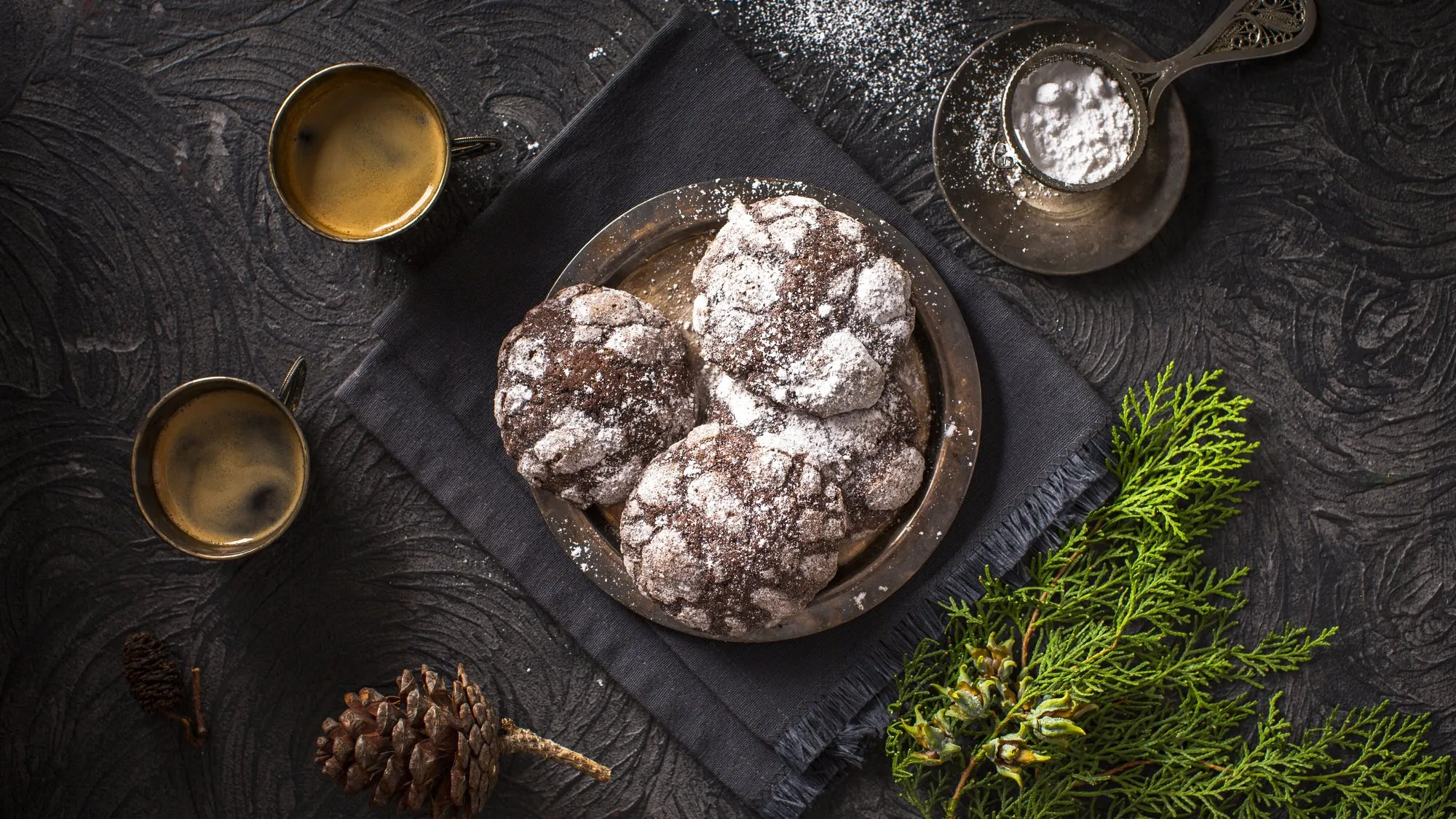
Chocolate crinkle cookies are soft cocoa cookies with fudgy, brownie-like centers and a crackled white coating of powdered sugar. The dark dough splits as it spreads in the oven, so each cookie comes out looking like it was dusted with snow. They’re a classic for holiday cookie trays, and the dough uses pantry staples: cocoa, sugar, oil, eggs and flour.
Key takeaways
- The dough is too sticky to shape straight away. Chill it for at least 2 hours so you can roll it into balls.
- Roll each ball in granulated sugar first, then thickly in powdered sugar. The first layer stops the powdered sugar from dissolving into the dough.
- Bake at 350°F for 10 to 12 minutes and pull the cookies while the centers still look soft. They firm up as they cool.
- The recipe makes about 36 cookies, keeps 5 days in a tin and freezes well, baked or as dough.
Why this recipe works
Oil instead of butter keeps the cookies moist and fudgy, and it means there’s no creaming step: you whisk everything by hand in two bowls. A full cup of cocoa powder gives deep chocolate flavor without melting any chocolate.
The crackle comes from the contrast between a firm, cold dough ball and its sugar coat. As the cookie spreads and puffs in the oven, the dry sugar shell can’t stretch, so it splits into the white-and-dark pattern crinkle cookies are known for.
Ingredient notes
Cocoa powder. Use unsweetened cocoa. Natural cocoa and Dutch-process cocoa both work here, because baking powder (not baking soda) does the leavening. Dutch-process cocoa gives darker cookies with a milder flavor.
Flour. Spoon the flour into the measuring cup and level it off, or weigh it (250 g). Packing the flour into the cup can add a lot of extra flour and make the cookies dry and cakey.
Oil. Any neutral oil works: vegetable, canola or a light-tasting olive oil.
Two sugars for the coating. Granulated sugar goes on first as a thin base. Powdered sugar goes on second and gives the bright white finish. Keep them in separate bowls.
Tips for soft centers and deep crinkles
Chill the dough properly
Chilling firms the dough so it’s easy to roll and holds its shape in the oven. If the dough softens while you’re shaping a batch, put it back in the fridge for 10 to 15 minutes. Warm dough spreads more and gives flatter cookies with fewer cracks.
The dough can stay covered in the fridge overnight. If it’s very firm the next day, let it sit at room temperature for 10 minutes before scooping.
Coat generously
Work with a few dough balls at a time and turn each one until it’s covered on all sides. If the powdered sugar looks thin or patchy, roll the ball again. A thin coat soaks into the dough and turns gray in the oven; a thick coat stays white.
Keep the balls round rather than flattened. A round ball rises and cracks; a flat disc spreads without much crackle.
Don’t overbake
Take the cookies out when the edges look set and the tops are cracked, but the centers still look slightly underdone. Five minutes on the hot baking sheet finishes them. Baking until the centers look firm makes the cookies dry once they cool.
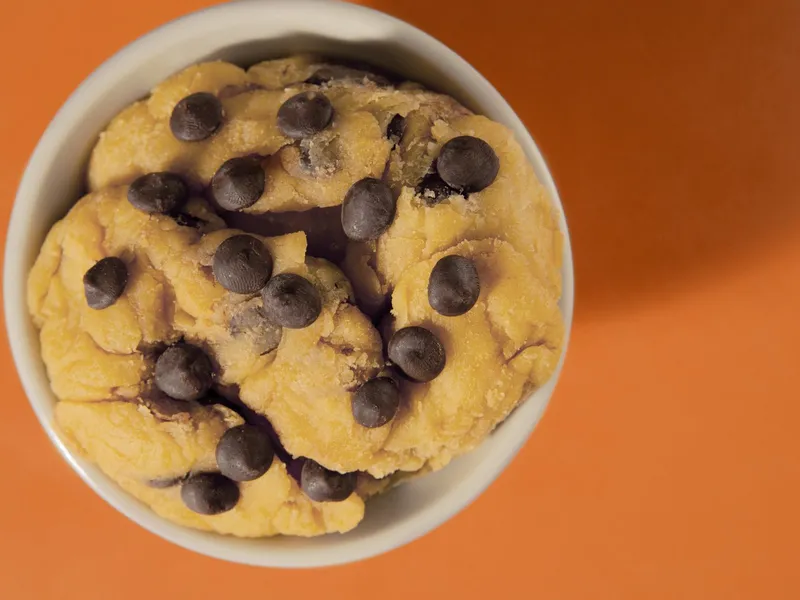
Don’t taste the dough while you work. It contains raw eggs and raw flour, which the CDC and FDA advise against eating. If you want a spoonable chocolate treat, try this edible cookie dough, which uses heat-treated flour and no eggs.
Variations and substitutions
- Chocolate chips: stir up to 1 cup (170 g) of semisweet or mini chocolate chips into the finished dough.
- Espresso: add 1 teaspoon of instant espresso powder to the dry ingredients for a deeper chocolate flavor.
- Mint chocolate: replace 1/4 teaspoon of the vanilla with 1/4 teaspoon of peppermint extract.
- Nuts: add 1/2 cup (60 g) of finely chopped walnuts or pecans.
- Butter instead of oil: swap the 1/2 cup of oil for 1/2 cup (113 g) of melted butter, cooled until just warm. The cookies taste buttery and come out slightly less tender.
- Gluten-free: use a measure-for-measure gluten-free flour blend that contains a binder such as xanthan gum. Texture varies by blend.
Keep add-ins modest so the dough balls still hold together and crack cleanly. If the dough feels soft after you’ve mixed something in, chill it again before shaping.
For another rolled cookie with a crackled top, try these soft and chewy snickerdoodles.
How to store, freeze and reheat
Room temperature: let the cookies cool completely, then store them in an airtight container for up to 5 days. Packing them while warm traps steam and makes the coating sticky.
Freezing baked cookies: layer the cooled cookies with parchment in a freezer container and freeze for up to 3 months. Thaw at room temperature. The coating may look a little less white after thawing; a light dusting of powdered sugar fixes it.
Freezing dough: shape the dough into balls without coating them, freeze them on a lined tray, then transfer to a freezer bag. Thaw them in the fridge, then roll in both sugars and bake as usual.
Warming: to bring back a just-baked texture, warm cookies in a 300°F oven for 3 to 5 minutes.
Frequently asked questions
What is the secret to crinkle cookies?
A cold, round dough ball and a thick sugar coating. Roll each ball in granulated sugar, then generously in powdered sugar, and bake until the edges are set but the centers still look soft.
Do you have to chill chocolate crinkle cookie dough?
Yes. The dough is too sticky to roll straight after mixing. Chill it for at least 2 hours, or overnight, until it’s firm enough to scoop and shape.
Why did my crinkle cookies come out flat?
Usually the dough was too warm, the balls were flattened, or the flour was under-measured. Keep the dough cold between batches and roll the portions into round balls.
Why did the powdered sugar disappear?
The coating was too thin, so it melted into the dough. Roll the balls in granulated sugar first, then cover them thickly in powdered sugar.
Can you freeze chocolate crinkle cookie dough?
Yes. Freeze uncoated dough balls for up to 3 months, thaw them in the fridge, then coat them in both sugars and bake.
Recipe
Chocolate crinkle cookies
- Prep
- 25 min
- Cook
- 24 min
- Total
- 2 hr 50 min
- Makes
- About 36 cookies
Ingredients
For the dough
- 2 cups (250 g) all-purpose flour
- 1 cup (85 g) unsweetened cocoa powder
- 2 teaspoons baking powder
- 1/2 teaspoon fine salt
- 2 cups (400 g) granulated sugar
- 1/2 cup (120 ml) neutral vegetable oil
- 4 large eggs
- 2 teaspoons vanilla extract
For the coating
- 1/2 cup (100 g) granulated sugar
- 1 cup (120 g) powdered sugar
Method
- 1 Whisk the flour, cocoa powder, baking powder and salt together in a medium bowl.
- 2 In a large bowl, whisk the 2 cups granulated sugar and the oil until combined. Add the eggs and vanilla and whisk until smooth and glossy.
- 3 Add the dry ingredients to the wet mixture and stir just until no dry streaks remain. The dough will be very soft and sticky.
- 4 Cover the bowl and refrigerate for at least 2 hours, until the dough is firm enough to scoop and roll.
- 5 Heat the oven to 350°F (175°C). Line two baking sheets with parchment paper. Put the 1/2 cup granulated sugar and the powdered sugar in two separate shallow bowls.
- 6 Scoop the chilled dough into 1-tablespoon portions and roll each into a ball. Roll each ball in granulated sugar first, then generously in powdered sugar until thickly coated.
- 7 Place the balls about 2 inches (5 cm) apart on the lined sheets. Keep the rest of the dough in the fridge between batches.
- 8 Bake for 10 to 12 minutes, swapping the sheets halfway through, until the cookies have spread and cracked, the edges are set and the centers still look soft.
- 9 Let the cookies cool on the baking sheets for 5 minutes, then move them to a wire rack to cool completely. Repeat with the remaining dough on cooled baking sheets.
Notes
- The total time includes 2 hours of chilling. The cookies bake in two rounds of two sheets, about 24 minutes in all.
- Keeps in an airtight container at room temperature for up to 5 days.
- Freeze baked cookies for up to 3 months, or freeze uncoated dough balls and coat them after thawing in the fridge.