Soft peanut butter cookies
Soft, chewy peanut butter cookies with crisp edges and a classic fork crosshatch. About 26 cookies from pantry staples, no chilling required.
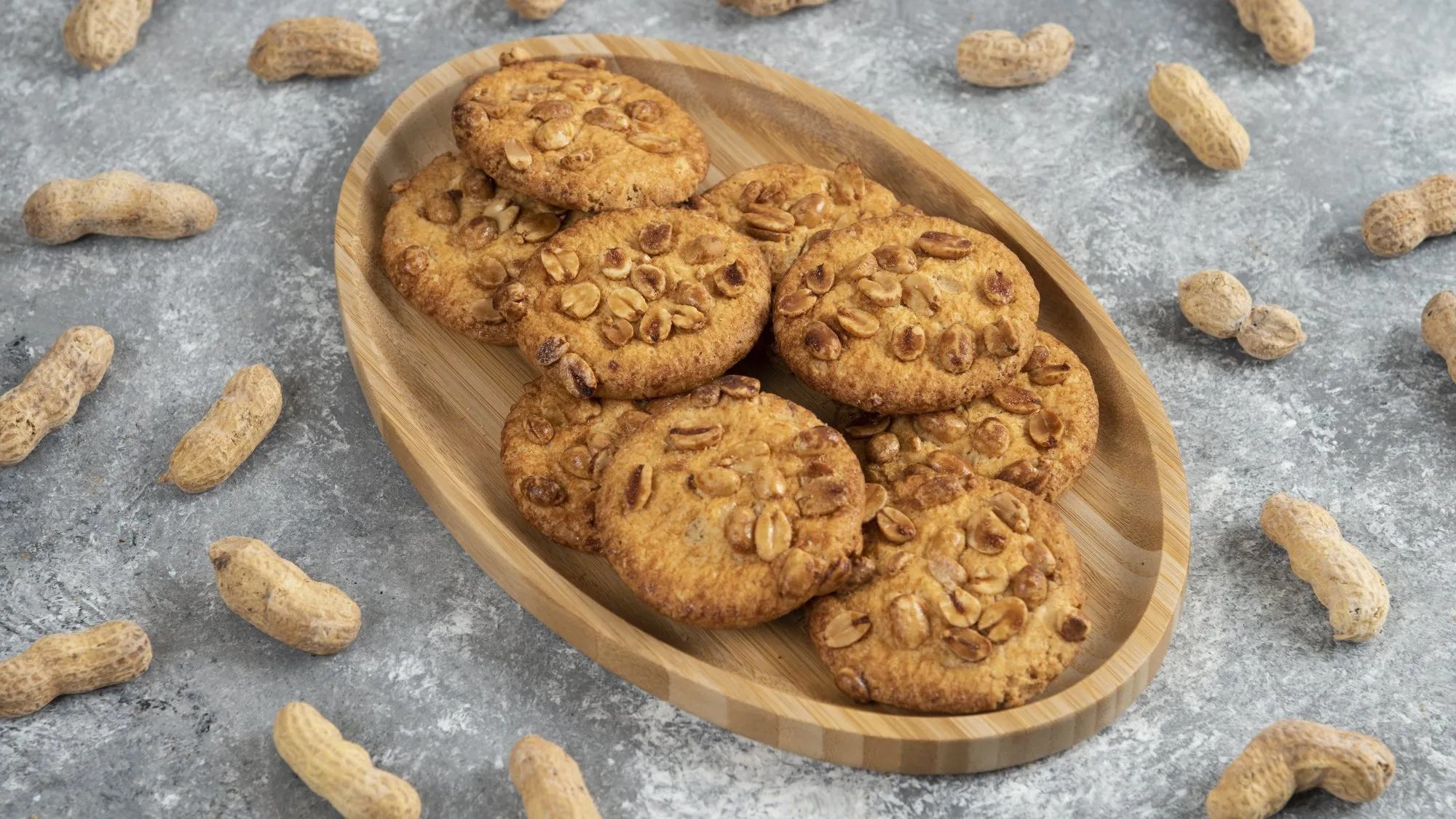
A peanut butter cookie is a buttery, sweet cookie with a strong roasted peanut flavor and a crosshatch pattern pressed in with a fork. This version bakes up soft and slightly chewy in the middle with lightly crisp edges. You get about 26 cookies from pantry staples, and the dough doesn’t need to be chilled.
Key takeaways
- A mix of brown sugar (for chew) and granulated sugar (for crisp edges) gives soft cookies with some structure.
- Bake at 350°F for 10 to 12 minutes and take the cookies out while the centers still look soft. They finish setting on the hot pan.
- Press each ball flat with a fork. Peanut butter dough doesn’t spread much on its own, so unflattened balls bake into thick, domed cookies.
- Measure the flour by weight (190 g), or spoon it into the cup and level it. Too much flour makes dry, crumbly cookies.
Why this recipe works
Classic peanut butter cookie recipes are built from the same few parts: roughly equal amounts of butter and peanut butter, a mix of brown and white sugar, one egg and about 1 1/4 to 1 1/2 cups of flour, with baking soda for lift. They bake at 350°F to 375°F for about 9 to 12 minutes. This recipe sits in the middle of that range.
Peanut butter is a fat, so it softens the dough the way butter does. Brown sugar holds on to moisture, which keeps the centers soft. Because the dough has no baking powder and little leavening, the cookies stay dense and chewy rather than puffing up like a cake, and the fork crosshatch flattens each ball so it bakes evenly.
Ingredient notes
Peanut butter. Use regular creamy peanut butter, the kind that doesn’t separate. Natural peanut butter varies a lot in oiliness. If you use it, stir it very well before measuring, and chill the dough for 30 minutes so it’s firm enough to roll. Crunchy peanut butter works too, in the same amount, and adds little bits of peanut to each bite.
Butter. It should be soft enough to leave a dent when pressed but still cool. Butter that is greasy or melted makes the cookies spread thin and turn crisp.
Brown sugar. Light brown sugar gives the most caramel-like flavor. Pack it into the measuring cup. If you’ve run out, see our guide to brown sugar substitutes.
Egg. A room-temperature egg blends into the butter more evenly. If you forgot to set it out, put the egg in a bowl of warm tap water for 5 minutes.
Salt. The recipe uses unsalted butter, so the salt does real work here. If your peanut butter is salted, use it as written.
Tips for the best texture
- Cream the butter, peanut butter and sugars well. About 2 minutes of beating makes the dough smooth and the cookies tender.
- Stop mixing when the flour disappears. More mixing makes cookies tough.
- Use a scoop or tablespoon for even cookies. Equal-sized balls bake at the same pace.
- Chill only if you need to. The dough handles fine at room temperature. If it feels sticky, your kitchen is warm, or you used natural peanut butter, chill it for 30 minutes. You can also refrigerate the dough for up to 3 days and bake it when you want.
- Dip the fork in sugar if it sticks. A little granulated sugar on the tines keeps the dough from pulling away.
- Pull them early. Edges that look set and tops that look dry mean the cookies are done, even if the middles are pale and soft. A minute too long gives a firm, crumbly cookie.
- Use a cool baking sheet for every batch. Dough on a hot pan melts and spreads before it sets.
Don’t sample the raw dough. Flour that hasn’t been baked can carry bacteria, and so can raw eggs. The CDC advises against eating raw dough or batter, and the FDA says never to eat or taste raw flour, dough or batter. Wash your hands, bowls and utensils after handling it.
Variations and substitutions
Chocolate chips. Fold in 1/2 cup of semisweet chocolate chips after the flour.
Chopped peanuts. Fold in 1/3 cup of chopped roasted peanuts for more crunch.
Flaky salt. Sprinkle a few flakes of coarse salt on each cookie as soon as it comes out of the oven.
Smooth or crunchy. Use creamy for a smooth, even crumb and crunchy for texture. The amount stays the same.
Smaller cookies. Use 1 tablespoon of dough per cookie and bake for 8 to 10 minutes. You’ll get closer to 40 cookies.
Flourless version. A different cookie, made from just peanut butter, sugar and an egg, is denser and more crumbly. It doesn’t follow this recipe, so don’t remove the flour here.
Storing, freezing and reheating
Room temperature. Once the cookies are completely cool, store them in an airtight container for up to 5 days. Put parchment paper between layers to protect the crosshatch.
Freezing baked cookies. Freeze cooled cookies in a single layer until firm, then transfer them to a freezer-safe container for up to 3 months. Thaw at room temperature.
Freezing dough. Roll the dough into balls, coat them in sugar, then press each one flat with a fork in a crosshatch before freezing. Freeze them on a tray until solid, then bag them for up to 3 months. Bake straight from frozen at 350°F, adding 1 to 2 minutes. Frozen dough won’t take a fork mark, so don’t wait until after freezing to shape it.
Reheating. Warm a cookie in the microwave for 8 to 10 seconds, or put a few on a baking sheet in a 300°F oven for 3 to 5 minutes.
Frequently asked questions
Do peanut butter cookies need to be chilled?
Not with regular creamy peanut butter. The dough rolls easily at room temperature. Chill it for 30 minutes if it’s sticky, if your kitchen is warm or if you’re using natural peanut butter.
Why are my peanut butter cookies dry and crumbly?
Usually too much flour or too long in the oven. Weigh the flour or spoon and level it, and take the cookies out while the centers still look soft.
Why did my cookies spread too much?
Butter that was too soft or melted, or a hot baking sheet, are the usual reasons. Chill the dough for 30 minutes and always use a cool sheet.
Why do you press peanut butter cookies with a fork?
The dough is dense and barely spreads, so a ball left alone bakes into a thick dome that can cook unevenly. Pressing flattens it for even baking, and the crosshatch has become the traditional look.
Can I use natural peanut butter?
Yes. Stir it well before measuring, and chill the dough, since natural peanut butter makes a softer, oilier dough. The cookies may be a little more delicate, so let them cool on the pan for the full 5 minutes.
Can I make the dough ahead?
Yes. Cover the dough and refrigerate it for up to 3 days, or freeze shaped, fork-pressed dough for up to 3 months.
Recipe
Soft peanut butter cookies
- Prep
- 15 min
- Cook
- 30 min
- Total
- 45 min
- Makes
- About 26 cookies
Ingredients
For the cookies
- 1 1/2 cups (190 g) all-purpose flour
- 1/2 teaspoon baking soda
- 1/4 teaspoon fine salt
- 1/2 cup (113 g, 1 stick) unsalted butter, softened
- 3/4 cup (190 g) creamy peanut butter
- 3/4 cup (150 g) packed light brown sugar
- 1/4 cup (50 g) granulated sugar
- 1 large egg, at room temperature
- 1 teaspoon vanilla extract
For rolling
- 3 tablespoons (40 g) granulated sugar
Method
- 1 Heat the oven to 350°F (175°C). Line two baking sheets with parchment paper.
- 2 Whisk the flour, baking soda and salt together in a medium bowl.
- 3 In a large bowl, beat the butter, peanut butter, brown sugar and 1/4 cup granulated sugar for about 2 minutes, until smooth and creamy. Beat in the egg and vanilla.
- 4 Add the flour mixture and mix on low speed just until no dry streaks remain. The dough will be soft.
- 5 Put the 3 tablespoons of sugar in a small bowl. Scoop the dough into 1 1/2-tablespoon portions and roll each into a ball, then roll the ball in the sugar.
- 6 Place the balls about 2 inches (5 cm) apart on the lined baking sheets. Press each one flat with the tines of a fork, then press again at a right angle to make a crosshatch.
- 7 Bake one sheet at a time for 10 to 12 minutes, until the edges are set and the tops look dry. The centers will still look soft.
- 8 Let the cookies rest on the hot baking sheet for 5 minutes, then move them to a wire rack to cool completely. Use a cooled sheet for each batch.
Notes
- The cookies bake in about three batches of 10 to 12 minutes each, so the cook time is 30 minutes in total.
- Keeps in an airtight container at room temperature for up to 5 days.
- Freeze baked cookies or shaped, fork-pressed dough for up to 3 months.