Creamy mashed potatoes
Fluffy, buttery mashed potatoes made with starchy potatoes, warm milk and plenty of butter. A reliable side for dinner or the holidays.
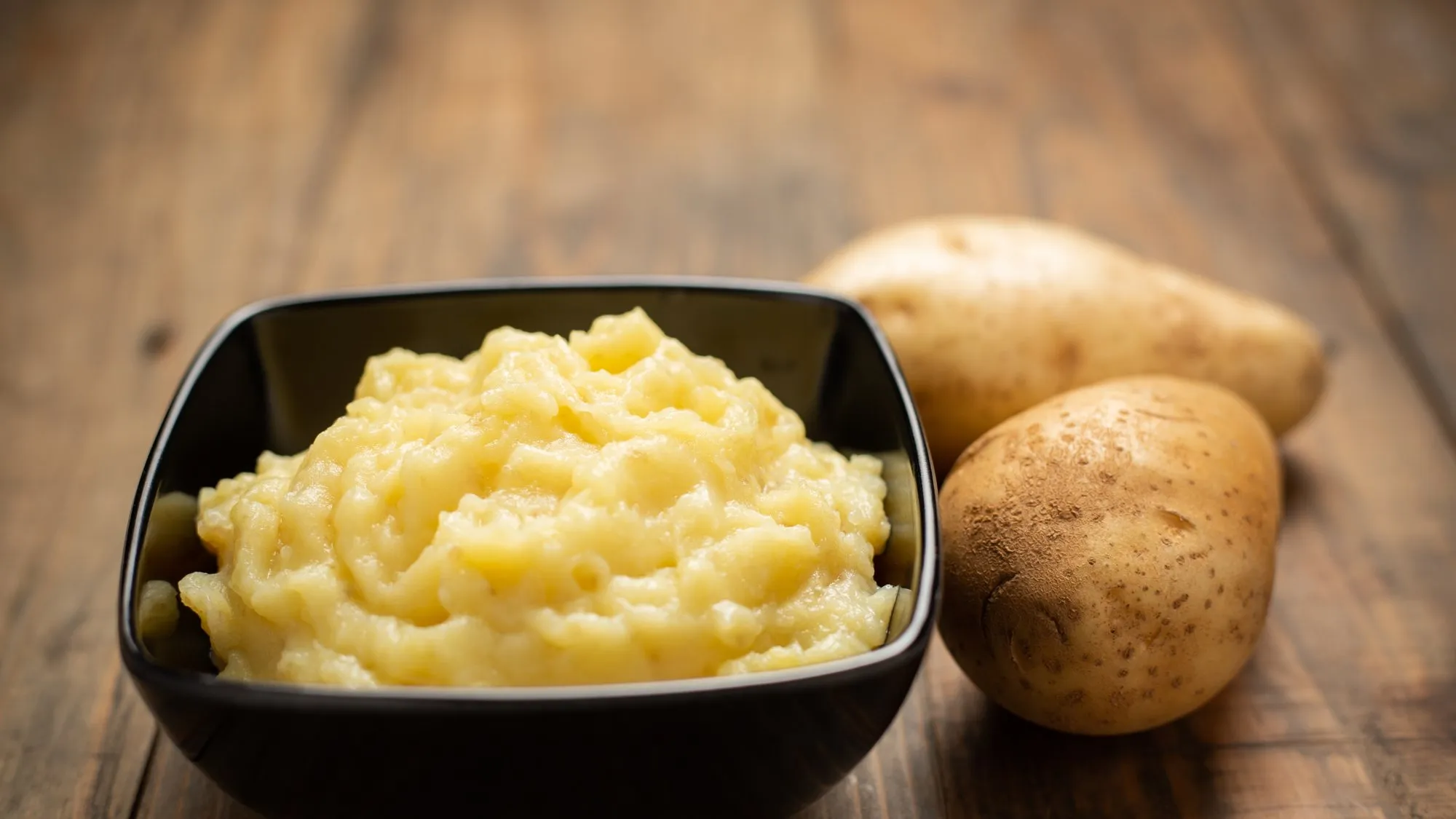
Good mashed potatoes are light, buttery and smooth, with just enough salt to make the potato taste like itself. They need only a few everyday ingredients, and the method is simple: boil evenly cut starchy potatoes in salted water, drain them well, then mash them with melted butter and warm milk.
This batch makes six servings and takes about 50 minutes, including peeling and chopping. It is the side that goes with roast chicken, meatloaf, gravy-covered anything and just about every holiday table.
Key takeaways
- Russet potatoes make the fluffiest mash, and Yukon Golds make a naturally creamier one. Either works.
- Start the potatoes in cold, salted water and cook them until a fork slides in with no resistance.
- Drain well, let the steam escape, then add butter first and warm milk second.
- Mash gently. Over-mixing makes potatoes gluey.
Why this method works
Cutting the potatoes into even chunks means they all finish cooking at the same time, so you do not end up with a mix of mushy and hard pieces. Starting in cold water lets the heat reach the center of each chunk gradually, which cooks them through without breaking the outsides apart. Salting the water seasons the potatoes all the way through, which is much more effective than salting at the end alone.
Draining and letting the potatoes steam dry for a moment matters just as much. Extra water makes a thin, loose mash that needs more butter to compensate. Stirring in the butter before the milk coats the starch in fat, which helps keep the potatoes smooth, and warm milk blends in without cooling everything down.
Ingredient notes
Potatoes. Russets are starchy and fall apart easily, so they give a light, fluffy mash. Yukon Golds are slightly waxier and have a buttery flavor and smooth texture. You can use half and half. Red or new potatoes hold their shape and suit a rustic, chunky mash with the skins left on. For more detail on cooking times for different cuts, see our guide to how long to boil potatoes.
Butter. Unsalted butter lets you control the salt. You can use salted butter and cut back on the added salt, tasting as you go.
Milk. Whole milk gives a creamy result. For an even richer mash, replace part of the milk with warm heavy cream or half-and-half.
Salt. Salt twice: once in the cooking water and once in the mash. Potatoes need more seasoning than most people expect.
Tips for fluffy, creamy results
- Cut the chunks about 1½ inches wide. Smaller pieces cook faster but absorb more water. Larger ones take longer and cook unevenly.
- Use the fork test, not just the timer. Chunk size and potato variety change the time. They are ready when a fork slides into the center without resistance and the edges start to crumble.
- Dry the potatoes. Returning the drained potatoes to the hot pot for 30 seconds helps steam off the surface moisture.
- Use a masher or a ricer. A hand masher gives a softer, slightly rustic mash. A ricer makes an extra-smooth, lump-free texture. Avoid a blender or food processor, which can turn potatoes into a sticky paste.
- Add the dairy gradually. Stop adding milk as soon as the potatoes look creamy. You can always stir in more.
- Keep it hot. Serve straight away, or hold the pot covered over very low heat for a few minutes.
Why mashed potatoes turn gluey
Potatoes are full of starch. When you overwork them with a blender, a food processor or a lot of vigorous stirring, the starch granules break open and the mash turns sticky and elastic. Mash just until the lumps are gone and stir the dairy in gently. If your mash has already turned gluey, it cannot be fixed, but it still tastes fine and works well as a topping for shepherd’s pie.
Variations and substitutions
- Garlic mashed potatoes. Add 4 to 6 peeled garlic cloves to the pot with the potatoes, or stir in roasted garlic with the butter.
- Cheesy. Fold in ½ to 1 cup of shredded cheddar or Gruyère at the end.
- Tangy. Stir in a few spoonfuls of sour cream or plain Greek yogurt for a little tang.
- Herbs. Finish with chopped chives, parsley or thyme.
- Without milk. Use warm chicken or vegetable broth, or some of the potato cooking water, in place of the milk. Add it a few tablespoons at a time.
- Dairy-free. Use olive oil or a dairy-free butter and warm broth or a plant-based milk. Taste as you go, since the salt needs may change.
- Skin-on. Use well-scrubbed Yukon Gold or red potatoes and leave the skins on for a more rustic mash.
Make ahead, store and reheat
To make them ahead, mash the potatoes as directed and keep them in a covered dish in the refrigerator. Reheat gently with a splash of milk before serving.
Refrigerate leftovers within 2 hours of cooking, in a covered container. They keep for 3 to 4 days, according to the USDA’s leftovers guidance, which also says leftovers should be reheated to 165°F.
To reheat on the stovetop, warm the potatoes in a pot over low heat, stirring and adding a splash of milk or broth. In the microwave, heat in a covered dish in short bursts, stirring between each. For a large batch, spread them in a covered oven-safe dish with a little milk and warm at 350°F until steaming hot.
To freeze, cool the mash completely and pack it into an airtight freezer container, leaving a little room at the top. Use it within 2 months for the best texture. Thaw overnight in the fridge and reheat with a splash of milk. A mash made with plenty of butter and milk freezes better than a lean one.
Frequently asked questions
What is the secret to really good mashed potatoes?
Use starchy potatoes like russets or Yukon Golds, cook them until completely tender, and drain them well. Then add warm butter and milk and mash gently, so the texture stays light.
Should I add milk or butter first?
Butter first. Let it melt into the hot potatoes, then stir in warm milk a little at a time. This order lets you control how creamy the mash gets.
How long should I boil potatoes for mashing?
Chunks about 1½ inches wide usually take 10 to 15 minutes at a gentle boil. Use a fork to check: it should slide in easily.
Can I make mashed potatoes ahead of time?
Yes. Make them a day or two ahead and refrigerate them in a covered container. Reheat with a splash of milk or broth.
Can I make mashed potatoes without milk?
Yes. Use warm broth or reserved potato cooking water instead. Add it a few tablespoons at a time. For a dairy-free version, use olive oil or a dairy-free butter as well.
Can I freeze mashed potatoes?
Yes. Freeze cooled mash in an airtight container for up to 2 months. Thaw it in the fridge overnight and reheat with a splash of milk.
Why are my mashed potatoes gummy?
They were over-mixed. A blender, a food processor or a lot of hard stirring breaks open the starch and makes the mash sticky. Use a masher or ricer and stir gently.
Recipe
Creamy mashed potatoes
- Prep
- 15 min
- Cook
- 35 min
- Total
- 50 min
- Makes
- 6 servings
Ingredients
For the potatoes
- 3 pounds (1.36 kg) russet or Yukon Gold potatoes, peeled and cut into 1½-inch chunks
- 1 tablespoon kosher salt, for the cooking water
For the mash
- ½ cup (4 ounces / 113 g) unsalted butter, cut into pieces
- ¾ cup (180 ml) whole milk, warmed, plus more as needed
- 1 teaspoon fine salt, plus more to taste
- ¼ teaspoon black pepper
Method
- 1 Put the potatoes in a large pot and cover with cold water by about 1 inch. Stir in the 1 tablespoon kosher salt and bring to a boil over high heat.
- 2 Reduce the heat to maintain a gentle boil and cook for 10 to 15 minutes, until a fork slides in easily.
- 3 While the potatoes cook, warm the milk in a small saucepan or in the microwave until steaming but not boiling.
- 4 Drain the potatoes well in a colander. Return them to the empty hot pot over low heat for about 30 seconds, stirring gently, so any excess moisture steams off.
- 5 Remove from the heat and mash the potatoes with a hand masher or ricer until no large lumps remain.
- 6 Add the butter and stir until it melts. Pour in the warm milk a little at a time, stirring gently, until the potatoes are as creamy as you like.
- 7 Season with the fine salt and pepper. Taste, add more salt if needed, and serve hot.
Notes
- Start the potatoes in cold water so they cook evenly from the outside in.
- Warm the milk so it blends in smoothly and keeps the potatoes hot.
- Refrigerate leftovers within 2 hours. They keep 3 to 4 days. Reheat with a splash of milk until steaming hot, at least 165°F.
- Freeze cooled mashed potatoes for up to 2 months.