Cornstarch substitutes for thickening and baking (with swap ratios)
Out of cornstarch? Use 2 tablespoons all-purpose flour, or 1 tablespoon arrowroot or potato starch, for each 1 tablespoon. Ratios for gravy, pies and baking.
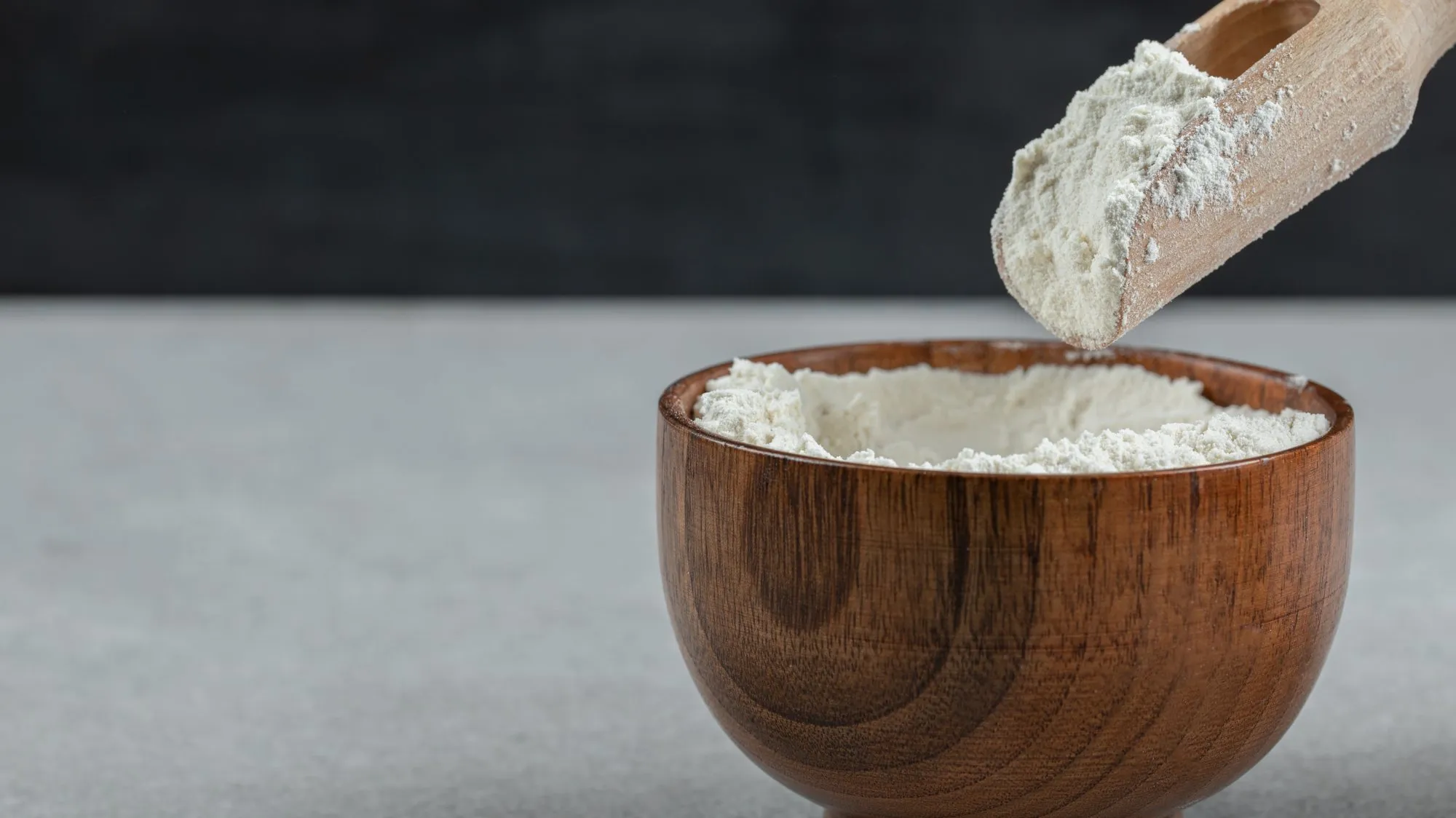
The best cornstarch substitute is all-purpose flour: use 2 tablespoons of flour for every 1 tablespoon of cornstarch. Cornstarch is roughly twice as strong a thickener as flour, so you need double the amount, and the sauce needs a few minutes of gentle cooking so the flour loses its raw taste.
If you have arrowroot or potato starch, swap them in at 1 tablespoon for 1 tablespoon. Those two thicken about as strongly as cornstarch and leave a clearer sauce than flour does. All the amounts below are per 1 tablespoon of cornstarch.
Key takeaways
- Flour: 2 tablespoons all-purpose flour for each 1 tablespoon cornstarch.
- Arrowroot or potato starch: 1 tablespoon for each 1 tablespoon cornstarch.
- Granular (quick-cooking) tapioca: 2 tablespoons for each 1 tablespoon cornstarch.
- Always mix the thickener with cold liquid first, then stir it into the hot dish.
- Going the other way: 1 tablespoon of flour equals 1½ teaspoons of cornstarch.
Cornstarch substitutes at a glance
Extension charts from the University of Missouri and Colorado State University agree on the flour and tapioca ratios. Colorado State gives the arrowroot ratio directly, and Missouri’s chart treats arrowroot, potato starch and cornstarch as equal in thickening strength.
| Substitute | Amount for 1 tablespoon cornstarch | Best for | How the dish changes |
|---|---|---|---|
| All-purpose flour | 2 tablespoons | Gravy, cream soups, stews, white sauce | Opaque, matte look; slightly heavier body; must simmer to cook off raw flour taste |
| Arrowroot | 1 tablespoon | Fruit sauces, glazes, clear pan sauces | Clear and glossy; not recommended for gravy, where it can turn stringy |
| Potato starch | 1 tablespoon | Gravy, soups, stir-fry sauces | More opaque than cornstarch, but clearer than flour |
| Granular (quick-cooking) tapioca | 2 tablespoons | Pie fillings and puddings that cook a while | Leaves small, soft, translucent beads; needs time to soften |
All-purpose flour
Flour is the swap most cooks can make right now. Use 2 tablespoons for every 1 tablespoon of cornstarch, a ratio that University of Missouri Extension, Colorado State University Extension, Illinois Extension and the University of Nebraska all give.
Flour looks and behaves differently from cornstarch:
- Look: flour-thickened sauces are cloudy and opaque. Cornstarch sauces are more translucent, according to Iowa State University Extension.
- Taste: raw flour tastes pasty. Simmer the sauce gently for several minutes, stirring often, until that taste is gone.
- Method: whisk flour into a little cold water or broth to make a slurry before adding it to hot liquid, or cook it in fat first as a roux.
For gravy, Iowa State’s ratio is 2 tablespoons fat, 2 tablespoons flour and 1 cup liquid for each cup of gravy. That 2 tablespoons of flour is the same thickening power as 1 tablespoon of cornstarch, so a recipe calling for 1 tablespoon of cornstarch per cup of liquid becomes 2 tablespoons of flour per cup.
Arrowroot and potato starch
Arrowroot and potato starch are pure starches, like cornstarch, so they swap one to one: 1 tablespoon for 1 tablespoon.
- Arrowroot gives a clear, glossy result, which suits fruit sauces and glazes. Iowa State Extension says to avoid arrowroot (and tapioca starch) in gravy, because they can turn stringy and look artificial.
- Potato starch is a better gravy choice. Iowa State Extension says potato starch gravy is more opaque than cornstarch but less opaque than flour.
Starch-thickened sauces need less simmering than flour-thickened ones. Stop heating once the sauce is as thick as you want. Iowa State Extension warns that overcooked, boiled starch gravy loses some of its thickness.
Granular tapioca
Granular or quick-cooking tapioca is not the same as tapioca starch. It is a coarse, pearly product, and the extension charts list it at 2 tablespoons for every 1 tablespoon of cornstarch (the same as flour). It works in pie fillings, fruit desserts and puddings that cook long enough for the granules to soften and turn translucent. It is a poor choice for a quick pan sauce.
Which swap for which dish
| Dish | Best swap | Why |
|---|---|---|
| Gravy | 2 tablespoons flour per 1 tablespoon cornstarch, or potato starch 1:1 | Flour makes a classic roux gravy; potato starch is the best starch alternative |
| Cream soups and chowders | Flour, 2 tablespoons per 1 tablespoon cornstarch | Opaque look suits creamy soups |
| Stir-fry and glaze sauces | Potato starch or arrowroot, 1:1 | Thickens quickly and stays fairly clear |
| Fruit pie filling | Arrowroot 1:1, or flour 2:1, or granular tapioca 2:1 | Arrowroot is glossiest; flour is cloudier |
| Pudding and custard | Flour 2:1, with steady stirring | Result is heavier and less silky than cornstarch |
| Chicken pie or pot pie filling | Flour roux | Same method as our chicken and leek pie |
How to add any thickener without lumps
- Measure. Use the table above, scaled to your recipe.
- Make a slurry. Stir the flour or starch into at least an equal amount of cold water, broth or juice until smooth.
- Stir it in. Pour the slurry slowly into the hot liquid while whisking.
- Heat until it thickens. Cook flour a few minutes more so it loses its raw taste. For starches, stop once it is thick.
- Adjust. Add a splash of liquid if it is too thick, or another small slurry if it is too thin. Wait a minute or two after each addition before judging.
Never sprinkle dry flour or starch straight into hot liquid. It clumps instantly.
Scaling the swap
Because flour is half as strong as cornstarch, double the cornstarch amount when swapping to flour, and halve the flour amount when swapping to cornstarch.
| Cornstarch in recipe | All-purpose flour instead | Arrowroot or potato starch instead |
|---|---|---|
| 1 teaspoon | 2 teaspoons | 1 teaspoon |
| 1 tablespoon | 2 tablespoons | 1 tablespoon |
| 2 tablespoons | ¼ cup (4 tablespoons) | 2 tablespoons |
| ¼ cup | ½ cup | ¼ cup |
For a sense of scale, Iowa State’s gravy ratio of 2 tablespoons of flour per cup of liquid works out to 1 tablespoon of cornstarch per cup. Check your recipe’s own amount and use the table to convert it.
Cornstarch in baking
When cornstarch is the thickener (a pie filling, custard or lemon curd), use the swaps above. When it appears in a cookie, shortbread or cake mix as a small amount of dry ingredient, it is there for texture rather than thickening, and the extension charts don’t give a tested swap. Replacing it with an equal amount of all-purpose flour is the usual workaround, but expect a slightly less tender crumb. Treat this as a judgment call, not a precise ratio.
If you are also short on dairy for a creamy dish, see our guide to heavy cream substitutes.
Frequently asked questions
What can I use if I don’t have cornstarch?
All-purpose flour is the easiest: 2 tablespoons for each 1 tablespoon of cornstarch. Arrowroot and potato starch swap 1 tablespoon for 1 tablespoon.
Can I use flour instead of cornstarch?
Yes. Use 2 tablespoons of flour for every 1 tablespoon of cornstarch, mix it with cold liquid first, and simmer the dish for a few minutes so the flour cooks through.
How much flour replaces 2 tablespoons of cornstarch?
¼ cup (4 tablespoons) of all-purpose flour.
What is the best cornstarch substitute for gravy?
Flour, or potato starch. Iowa State University Extension names potato starch as the best starch alternative for gravy and says to avoid arrowroot and tapioca starch, which can become stringy.
Is cornstarch the same as cornflour?
In the United States, cornstarch is the fine white starch sold in a box in the baking aisle. In British recipes, the same product is called cornflour.
Can I replace flour with cornstarch?
Yes, in sauces and fillings. Use half as much: 1½ teaspoons of cornstarch for every 1 tablespoon of all-purpose flour.
Why is my sauce still thin?
Starch needs heat to thicken. Check that you used the right amount from the table, let the sauce heat gently for a minute or two, and stir in another small slurry only if it is still thin. Iowa State University Extension notes that overcooked, boiled starch gravy loses some of its thickness, so don’t keep boiling it.