Buttermilk substitutes: 6 easy swaps and how much to use
Out of buttermilk? Stir 1 tablespoon vinegar or lemon juice into milk to make 1 cup and let it stand 5 to 10 minutes. Five more swaps and ratios inside.
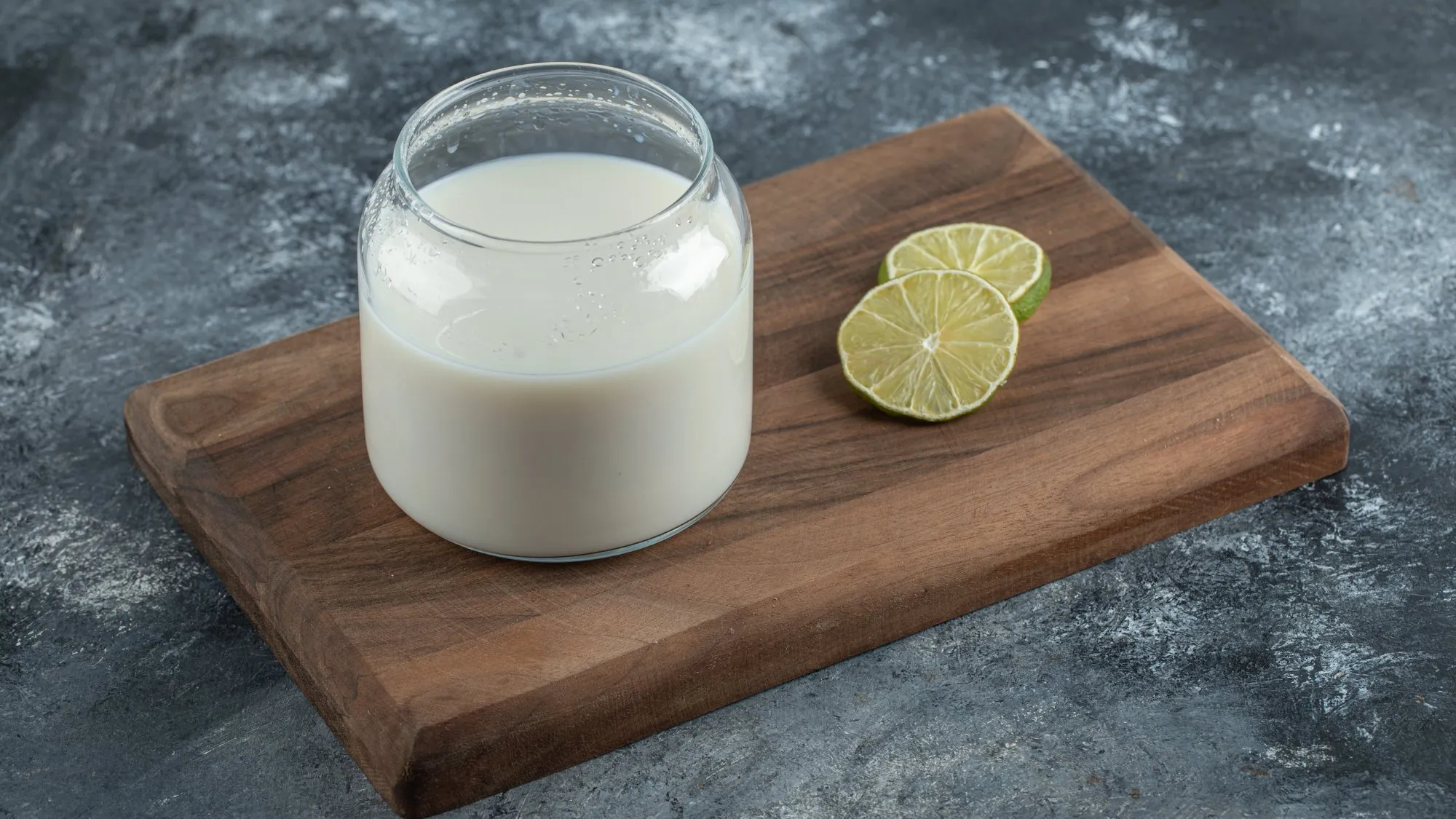
The best buttermilk substitute is 1 tablespoon of white vinegar or lemon juice stirred into a liquid measuring cup, then filled with milk to the 1-cup line. Let it stand for 5 to 10 minutes and use it in place of buttermilk, cup for cup.
That swap works because buttermilk does two jobs in a recipe: it adds moisture, and it adds acid that reacts with baking soda to help batters rise. Acidified milk, plain yogurt, kefir and a few other pantry options all cover both jobs. They differ in how thick they are and how they taste.
Key takeaways
- Fastest swap: 1 tablespoon vinegar or lemon juice plus enough milk to make 1 cup, rested 5 to 10 minutes.
- No vinegar flavor: 1 cup milk plus 1¾ teaspoons cream of tartar.
- Thicker swaps: 1 cup plain yogurt, or ¾ cup sour cream mixed with ¼ cup milk.
- Dairy-free: the same vinegar or lemon juice method works with soy, oat or nut milk.
- Plain milk alone has no acid, so it won’t give baking soda the lift a recipe expects.
Buttermilk substitutes at a glance
Every amount below replaces 1 cup of buttermilk. The acidified milk, cream of tartar, plain yogurt and plant-milk swaps come from university extension charts. Kefir, thinned sour cream and thinned Greek yogurt are common kitchen practice that follow the same logic of matching buttermilk’s acidity and pourable thickness.
| Swap | Amount for 1 cup buttermilk | Best for | Taste and texture |
|---|---|---|---|
| Milk plus white vinegar or lemon juice | 1 tablespoon vinegar or lemon juice, plus milk to make 1 cup; rest 5 to 10 minutes | Pancakes, waffles, muffins, cakes, biscuits, quick breads | Slightly thinner than buttermilk, mild tang; lemon adds a faint citrus note |
| Milk plus cream of tartar | 1 cup milk plus 1¾ teaspoons cream of tartar | Baking where you don’t want any vinegar or lemon aroma | Thin and neutral; whisk well to avoid lumps |
| Plain yogurt | 1 cup plain yogurt; if it is very thick (Greek), use ¾ cup yogurt plus ¼ cup milk or water | Cakes, muffins, marinades, dressings | Thicker and tangier; can make a batter a little denser |
| Plain kefir | 1 cup plain, unsweetened kefir | Pancakes, marinades, ranch-style dressings | Closest to buttermilk in pourability and tang |
| Sour cream | ¾ cup sour cream plus ¼ cup milk or water | Biscuits, coffee cake, dips | Richer and heavier; stir until smooth |
| Plant milk plus acid | 1 tablespoon vinegar or lemon juice, plus unsweetened plant milk to make 1 cup; rest 5 to 10 minutes | Dairy-free baking | Thinner; carries a hint of the plant milk’s flavor |
The best swap: milk plus vinegar or lemon juice
This is the swap most extension services list first: University of Missouri Extension, Illinois Extension, Colorado State University Extension and University of Maine Cooperative Extension all give the same ratio of 1 tablespoon acid to 1 cup total. Colorado State and Illinois say to let it stand 5 minutes; Maine and Missouri allow 5 to 10. Use the full 5 to 10 minutes if you have it.
- Pour 1 tablespoon white vinegar or lemon juice into a liquid measuring cup.
- Add milk until the liquid reaches the 1-cup line. That means you use about 1 cup minus 1 tablespoon of milk.
- Stir once and leave it for 5 to 10 minutes. It may look slightly curdled; that is normal.
- Stir again and use it exactly as you would use buttermilk.
University of Maine Cooperative Extension notes that any type of milk works here, including dairy, nut, oat and soy milk, and at any fat level. Whole milk gives a slightly richer result than skim.
White vinegar keeps the flavor in the background, which suits savory recipes such as biscuits or cornbread. Lemon juice adds a light citrus note that fits sweet batters like pancakes and lemon loaf.
If you make extra, Maine Extension advises refrigerating it within 2 hours and using it within 4 days.
Other swaps and when to use them
Cream of tartar and milk
Cream of tartar is a dry acid. Missouri Extension lists 1 cup of milk plus 1¾ teaspoons of cream of tartar (Colorado State gives a range of 1¼ to 1¾ teaspoons). Whisk it into the milk until smooth, or stir it into the dry ingredients and add plain milk with the wet ingredients. The second method avoids clumps in thick batters.
Plain yogurt
Missouri Extension and Colorado State both list 1 cup of plain yogurt as a one-to-one replacement for buttermilk. Regular plain yogurt is usually close enough in texture. Greek yogurt is much thicker, so whisk ¾ cup of it with ¼ cup milk or water to get about 1 cup of pourable swap. Use unflavored, unsweetened yogurt so you don’t add sugar or flavor the recipe doesn’t expect.
Kefir
Plain kefir is a cultured, pourable milk drink, so it behaves a lot like buttermilk. Use it one to one. If yours is thick, loosen it with a splash of milk. It is a good match for pancakes and marinades.
Sour cream
Sour cream is too thick to pour like buttermilk, so thin it first: whisk ¾ cup sour cream with ¼ cup milk or water until smooth. It makes baked goods a little richer, which suits biscuits, scones and coffee cakes. It is not a good fit for a thin crêpe or pancake batter unless you thin it further.
Dairy-free: plant milk plus acid
Use the same method as the main swap: 1 tablespoon vinegar or lemon juice, then unsweetened plant milk to make 1 cup, rested 5 to 10 minutes. Choose a plain, unsweetened milk with a neutral taste so it doesn’t change the recipe. The result is usually thinner than real buttermilk, so watch the batter and stop mixing once it looks like the recipe describes.
How to choose by recipe
| Recipe | Swap to try | What to expect |
|---|---|---|
| Pancakes, waffles, quick breads | Milk plus vinegar or lemon juice, or kefir | Pourable batter with a light tang |
| Cakes, muffins, coffee cake | Plain yogurt or thinned sour cream | More body and a softer, richer crumb |
| Biscuits and scones | Milk plus vinegar, or thinned sour cream | Tender crumb; use cold, as the recipe directs |
| Fried chicken marinade | Kefir, or yogurt thinned with milk | Tangy coating that clings to the meat |
| Dressings and dips | Plain yogurt or thinned sour cream | Creamier and tangier than acidified milk |
| Dairy-free baking | Plant milk plus acid | Thinner liquid, mild flavor |
For marinades with raw chicken, keep the chicken refrigerated while it soaks, and throw out the used marinade rather than pouring it over cooked food. Cook the chicken to a safe minimum internal temperature of 165°F, as USDA recommends.
Why plain milk isn’t enough
Baking soda needs an acid to react. Buttermilk supplies it, which is why a recipe that calls for both buttermilk and baking soda can go flat if you swap in plain milk. Adding vinegar, lemon juice or cream of tartar, or using an already-acidic swap like yogurt or kefir, puts the acid back. Baking powder contains its own acid, so recipes that use only baking powder are more forgiving.
Scaling the swap up or down
Keep the same ratio of 1 tablespoon of acid for every 1 cup of finished liquid.
| Buttermilk needed | Acid | Then add milk to make |
|---|---|---|
| ¼ cup | ¾ teaspoon | ¼ cup |
| ½ cup | 1½ teaspoons | ½ cup |
| 1 cup | 1 tablespoon | 1 cup |
| 2 cups | 2 tablespoons | 2 cups |
For a thicker dairy swap, use the same proportion. For ½ cup of yogurt-based swap with Greek yogurt, whisk 6 tablespoons Greek yogurt with 2 tablespoons milk or water.
If the finished batter looks too thick, add a spoonful of milk. If it looks too loose, don’t add extra flour unless the recipe says to, and mix only until the wet and dry ingredients come together.
Frequently asked questions
Can I use vinegar instead of buttermilk?
Yes. Stir 1 tablespoon of white vinegar into a measuring cup, add milk to the 1-cup line, and let it stand 5 to 10 minutes. The vinegar flavor bakes out and is hard to notice in cakes, pancakes and biscuits.
Can I use lemon juice instead?
Yes, in the same amount: 1 tablespoon of lemon juice plus milk to make 1 cup. Lemon juice leaves a faint citrus flavor, so it fits sweet recipes best.
How do I make ¼ cup of buttermilk substitute?
Measure ¾ teaspoon of vinegar or lemon juice into a ¼-cup measure and fill it with milk. Let it stand 5 to 10 minutes.
Can I use yogurt instead of buttermilk?
Yes. University extension charts list 1 cup of plain yogurt for 1 cup of buttermilk. If the yogurt is very thick, thin ¾ cup of it with ¼ cup milk or water.
Does the substitute have to curdle?
Slight curdling or thickening is normal and a sign the acid has worked, but it is not required. Rest the mixture the full 5 to 10 minutes either way.
Is there a dairy-free buttermilk substitute?
Yes. Use 1 tablespoon of vinegar or lemon juice with enough unsweetened soy, oat or nut milk to make 1 cup. University of Maine Cooperative Extension says any type of milk can be used for this swap.
Can I use a buttermilk substitute in fried chicken?
Yes. Kefir, plain yogurt thinned with a little milk, or milk soured with vinegar all work as a tangy marinade. Keep the chicken in the fridge while it marinates and cook it to an internal temperature of 165°F.
What if I don’t have vinegar, lemon juice or cream of tartar?
Plain yogurt, kefir, or thinned sour cream need no added acid. If you are also short on other dairy, see our guide to heavy cream substitutes.