Baking soda vs baking powder: the difference and how to swap them
Baking soda needs an acid to work, while baking powder brings its own. Exact swap amounts, what changes in rise and taste, and how to test freshness.
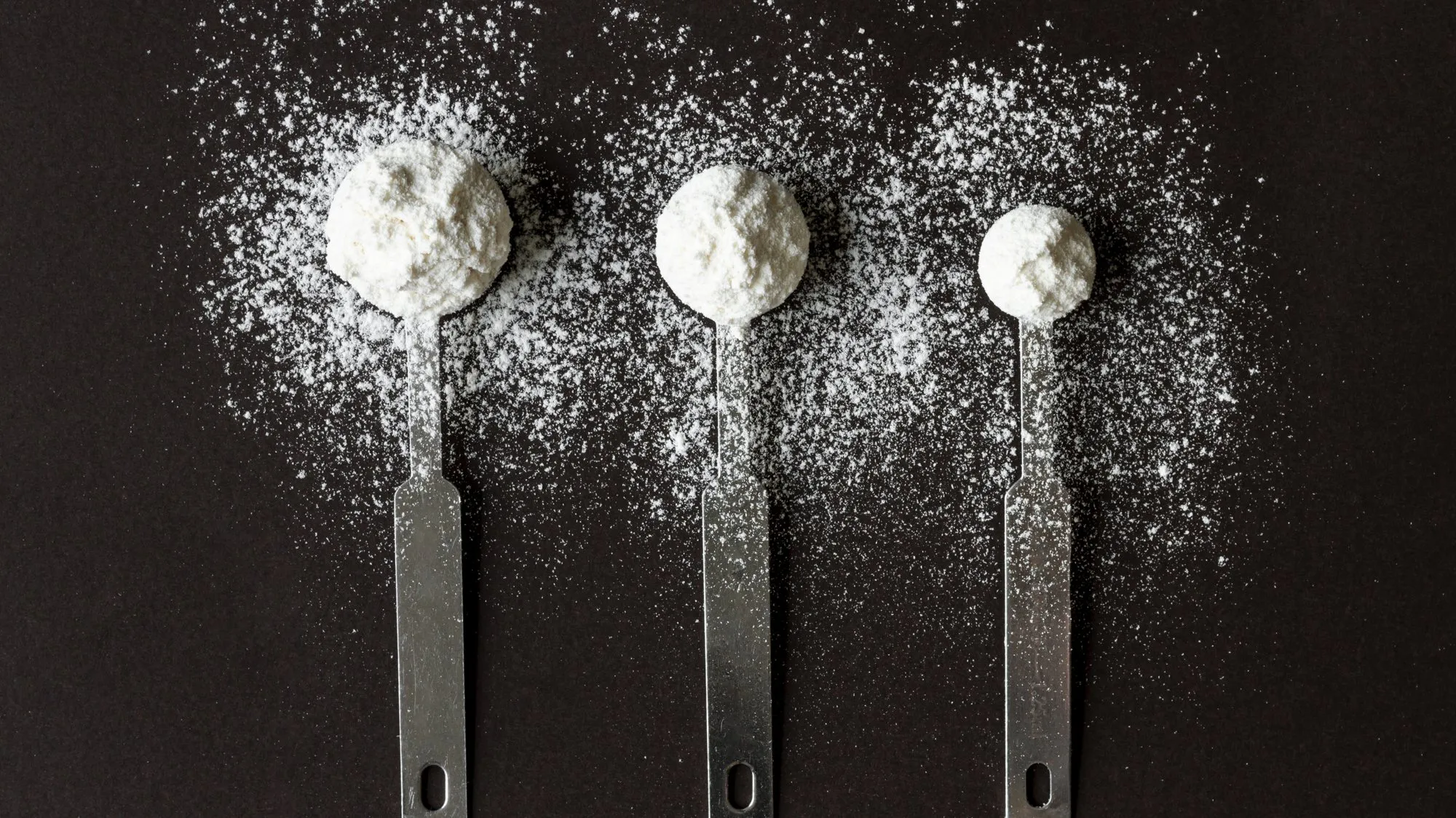
Baking soda is pure sodium bicarbonate and only makes batter rise when the recipe also contains an acid, such as buttermilk, yogurt, vinegar or brown sugar. Baking powder is baking soda already mixed with dry acid, so it works on its own. That makes baking soda roughly three to four times stronger by volume, which is why the usual swap is 1 teaspoon baking powder for every ¼ teaspoon baking soda plus an acid.
You can swap one for the other in a pinch, but the amounts are different and the result will change a little in rise, color and flavor. The tables below give exact amounts, and the sections after them explain what is going on so you can make a good call when your recipe is unusual.
Key takeaways
- Baking soda needs an acid in the batter to release gas. Baking powder contains its own acid.
- To replace 1 teaspoon baking powder, use ¼ teaspoon baking soda plus ½ teaspoon cream of tartar.
- To replace 1 teaspoon baking soda, use 3 teaspoons (1 tablespoon) baking powder.
- Too much of either can leave a soapy or metallic aftertaste, so measure level spoonfuls.
- Test both before an important bake: a powder that has gone flat looks exactly like a fresh one.
Baking soda vs baking powder at a glance
| Baking soda | Baking powder | |
|---|---|---|
| What it is | Sodium bicarbonate, a single ingredient | Baking soda plus one or more dry acids, usually with cornstarch |
| Needs an acid in the recipe? | Yes (buttermilk, yogurt, vinegar, lemon juice, molasses, brown sugar) | No, the acid is built in |
| When it starts working | As soon as it meets acid and liquid | When it gets wet, then again in the oven (double-acting) |
| Strength | Strong: a little goes a long way | Milder: you use about 3 to 4 times as much by volume |
| Typical effect | Lift, plus deeper browning and more spread in cookies | Lift with a softer, paler, more cake-like crumb |
How baking soda works
Sodium bicarbonate is a base. When it meets an acid and moisture, the two react and release carbon dioxide gas. The gas gets trapped in the batter as bubbles, and the heat of the oven sets the structure around them, which is what makes the bake rise.
That reaction starts almost at once. NC State notes that baking soda reacts with acid more or less immediately, which is why recipes that rely on it tell you to mix the batter quickly and get it into the oven. K-State Extension recommends baking within the hour once the soda and an acidic ingredient have been combined, and mixing lightly so you do not knock out the bubbles.
The recipe has to supply enough acid to use up the soda. Any soda left over is not neutralized, and it can leave a soapy or metallic taste.
How baking powder works
Baking powder is a premixed leavener: baking soda, powdered acids, and usually a little cornstarch to keep the dry ingredients from reacting in the container. You do not need an acid in the recipe, which is why it is the usual choice for plain batters made with ordinary milk.
Most baking powder sold in the US is double-acting. Part of the gas is released when the powder is stirred into wet ingredients. The rest is released later, when the batter heats past about 170°F in the oven, according to K-State Extension. That second burst is what gives cakes and biscuits extra lift as they bake.
Why some recipes use both
A recipe that has some acid but not enough to give all the lift it needs can use both. A little baking soda neutralizes the acid that is already in the batter (and also supports browning), while baking powder supplies the rest of the rise. Cookies made with brown sugar are a good example: King Arthur Baking notes that brown sugar is acidic, so recipes with it often lean on baking soda for leavening. If you are out of brown sugar, our guide to brown sugar substitutes covers how to make it from granulated sugar and molasses, which keeps the acid in the recipe.
Because the amounts are tuned to the other ingredients, it is best to follow the recipe as written when it calls for both. If you only have one, use the swap amounts below.
How to swap one for the other
These amounts come from university extension services and King Arthur Baking. Where sources differ slightly, the more common amount is used and the variation is noted.
| If the recipe calls for | Use instead | Notes |
|---|---|---|
| 1 teaspoon baking powder | ¼ teaspoon baking soda + ½ teaspoon cream of tartar | The closest swap. K-State and King Arthur also add ¼ teaspoon cornstarch to the mix. |
| 1 teaspoon baking powder | ¼ teaspoon baking soda + ½ cup buttermilk, sour milk or plain yogurt | Cut the other liquid in the recipe by ½ cup. |
| 1 teaspoon baking powder | ¼ teaspoon baking soda + ½ tablespoon lemon juice or vinegar, with milk added to make ½ cup | Cut the other liquid in the recipe by ½ cup. |
| 1 teaspoon baking soda | 3 teaspoons (1 tablespoon) baking powder | No extra acid needed, but expect a milder color and flavor. |
To scale these up, keep the proportions: 2 teaspoons baking powder is ½ teaspoon baking soda plus 1 teaspoon cream of tartar, and 1 tablespoon (3 teaspoons) baking powder is ¾ teaspoon baking soda plus 1½ teaspoons cream of tartar.
NDSU and Utah State extension publications list slightly more cream of tartar (⅝ teaspoon) per teaspoon of baking powder. The difference is small, and ½ teaspoon is the amount most baking references use.
The first row is also a recipe for homemade baking powder: for every 1 teaspoon you need, stir together ¼ teaspoon baking soda, ½ teaspoon cream of tartar and ¼ teaspoon cornstarch, and use the whole mix in place of 1 teaspoon of baking powder.
What changes when you swap
- Rise. Swapping at the amounts in the table gives similar lift. Swapping teaspoon for teaspoon does not, because baking soda is so much stronger. Baking powder used in place of baking soda at 1 to 1 gives too little lift, and baking soda used in place of baking powder at 1 to 1 gives too much, which can make a batter rise quickly and then collapse.
- Taste. If baking soda is not fully neutralized by acid, it tastes soapy or metallic. Replacing baking soda with baking powder can leave a recipe that was designed around buttermilk or yogurt tasting flatter and less tangy.
- Color and spread. Baking soda makes a batter less acidic, which tends to encourage deeper browning and more spread in cookies. Using only baking powder usually gives paler, puffier cookies and a more cake-like crumb.
- Texture. The larger volume of baking powder in a baking soda swap can make a crumb a little coarser or drier. Using baking soda plus a liquid acid also changes the amount of liquid, which is why the table asks you to cut some other liquid.
How to test whether they are still active
Both powders usually carry a best-by date of 18 to 24 months, and both can lose strength sooner if they get damp or contaminated. Test them before an important bake.
- Baking soda: stir 1½ teaspoons baking soda into 1 tablespoon vinegar in a small bowl. If it fizzes, it is still usable.
- Baking powder: stir 1 teaspoon baking powder into 1 tablespoon warm water. If it does not fizz, throw it out.
Store both in their original containers in a cool, dry cupboard, not above the stove where heat and steam can change them. Dip a clean, dry spoon, because a damp measuring spoon can start a reaction in the container. Level the spoon off with a knife rather than heaping it.
If you are baking without eggs, our guide to egg substitutes for baking shows where baking powder and vinegar can help replace an egg’s lift.
Frequently asked questions
Can I use baking powder instead of baking soda?
Yes. Use 3 teaspoons (1 tablespoon) of baking powder for every 1 teaspoon of baking soda. You do not need to add an acid, but the bake may be paler and milder-tasting than the original recipe.
Can I use baking soda instead of baking powder?
Yes, but not on its own. For every 1 teaspoon of baking powder, use ¼ teaspoon of baking soda plus ½ teaspoon of cream of tartar. If you have no cream of tartar, use ¼ teaspoon of baking soda with ½ cup of buttermilk, sour milk or plain yogurt and cut the other liquid in the recipe by ½ cup.
Is baking soda stronger than baking powder?
Yes. By volume, baking soda is roughly three to four times as strong, which is why 1 teaspoon of baking soda is replaced by 3 teaspoons of baking powder, and 1 teaspoon of baking powder needs only ¼ teaspoon of baking soda.
What happens if I use too much baking soda or baking powder?
Too much baking soda can leave a soapy or metallic taste and make the bake darker and coarser. Too much of either can make a batter rise quickly and then sink in the middle. Use level measuring spoons and follow the recipe amount.
Do baking soda and baking powder expire?
Both usually carry a best-by date of 18 to 24 months, and both can lose strength sooner if they get damp or contaminated. Use the vinegar test for baking soda and the warm-water test for baking powder to check them.
Can I use both baking soda and baking powder in the same recipe?
Yes, many recipes do. The baking soda neutralizes some of the acid already in the batter, such as buttermilk or brown sugar, while baking powder adds extra lift. If a recipe lists both, use both in the amounts given.