Classic beef stew
A classic stovetop beef stew with tender chuck, carrots and potatoes in a rich gravy. Serves 6, with tips for browning, thickening and freezing leftovers.
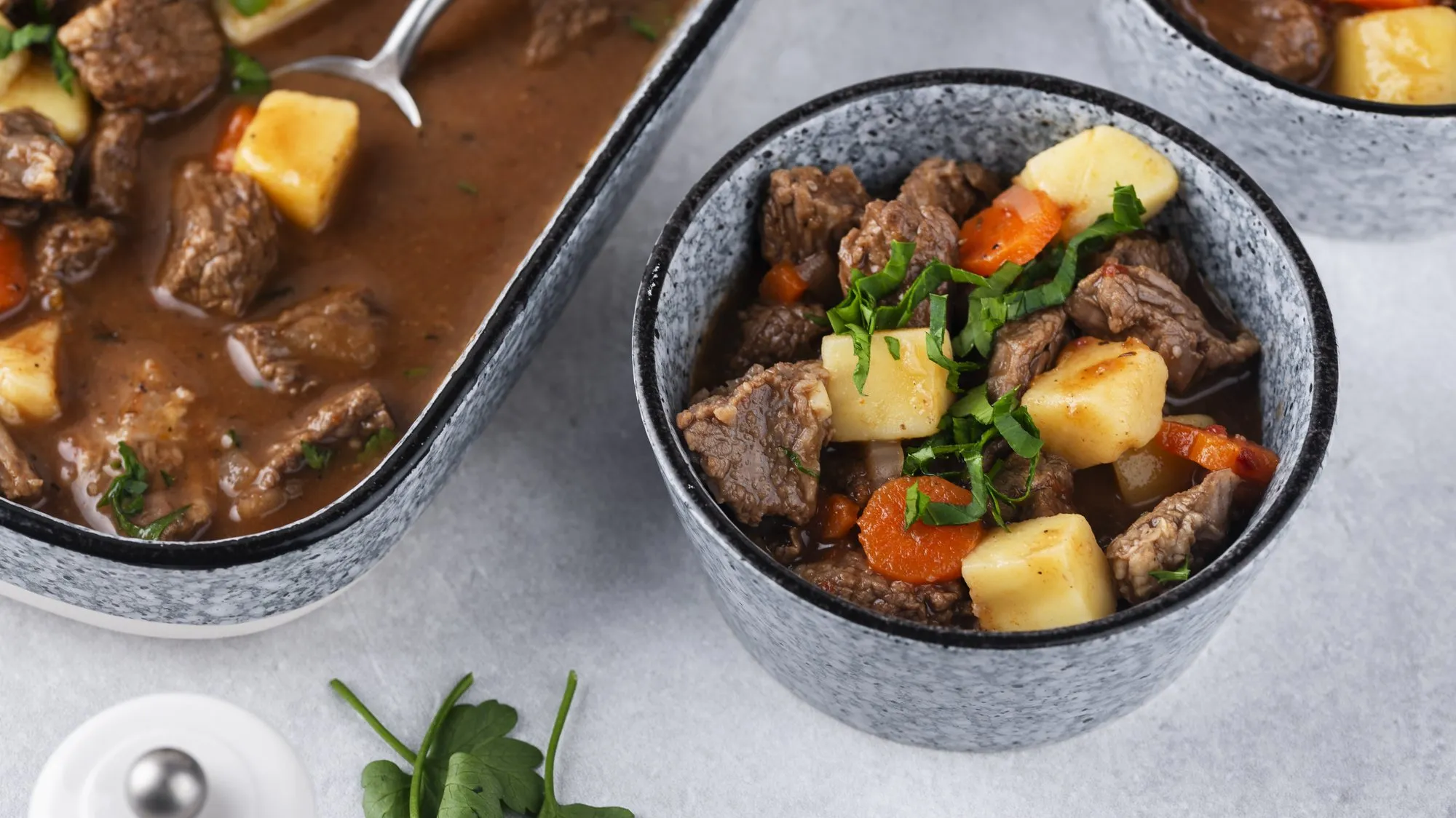
A good beef stew starts with well-browned chuck and finishes with a long, gentle simmer. You get fork-tender beef, carrots and potatoes that hold their shape, and a savory gravy, all from one pot. It’s an easy weekend dinner that tastes even better the next day.
Key takeaways
- Use beef chuck. Its connective tissue melts during a slow simmer, so the meat turns tender instead of dry.
- Brown the beef in batches. Crowding the pot steams the meat and you lose the browned bits that flavor the gravy.
- Simmer the beef on its own for 1 hour 15 minutes before adding the vegetables, so they finish at the same time without going mushy.
- Keep the pot at a bare simmer, not a rolling boil. Refrigerate leftovers within 2 hours and reheat them to 165°F.
Why this recipe works
Beef stew is all about time and gentle heat. Chuck comes from the shoulder and is full of collagen, which only breaks down after a couple of hours of slow, moist cooking. Cooked fast or hard, it stays chewy.
Browning the floured beef does two jobs. The seared surface and the browned bits stuck to the pot give the gravy its deep, savory flavor, and the flour slowly thickens the broth as the stew cooks, so you don’t need to thicken it separately.
Adding the vegetables partway through is the other key. Carrots and potatoes need less than an hour. If they go in at the start with the beef, they break down long before the meat is ready.
Ingredient notes
Beef. Buy a whole chuck roast and cut it yourself into even 1 1/2-inch cubes, trimming off thick, hard pieces of fat but leaving the marbling. Pre-cut “stew meat” works, but it’s often a mix of cuts that cook at different speeds.
Potatoes. Yukon Gold or red potatoes hold their shape. Russets work too, but they break down more and make a thicker, cloudier gravy.
Wine. Dry red wine adds depth and a little acidity. Any dry red you’d drink is fine. For a wine-free stew, use an extra cup of beef broth.
Broth. Low-sodium broth gives you more control over the salt. Taste at the end and season then.
Tips for the best stew
Dry the beef and brown it in batches
Pat the cubes dry before seasoning. Wet meat steams instead of browning. Leave space between the pieces and let them sit undisturbed for a few minutes before turning, so they develop deep brown patches. Two or three batches is normal for 2 1/2 pounds of beef.
Scrape up the browned bits
The dark layer on the bottom of the pot after browning is flavor, not burn. The moisture from the onion starts to loosen it, and the wine or broth finishes the job. Scrape well; it all dissolves into the gravy.
Keep it at a bare simmer
Once the stew is covered, turn the heat down until you see just a few small bubbles breaking the surface. A hard boil tightens the meat fibers and breaks the potatoes apart.
Test the beef, not the clock
The stew is done when a cube of beef gives way easily to a fork. Every cut is different, so if the meat still feels firm after the full time, keep simmering and check every 15 minutes.
Variations
- Thicker gravy: stir 1 tablespoon of cornstarch into 1 tablespoon of cold water and stir it into the simmering stew. Cook for a few minutes before adding more. Out of cornstarch? See these cornstarch substitutes.
- Other vegetables: swap parsnips for some of the carrots, add 8 ounces of sliced mushrooms with the onion, or stir in green beans for the last 10 minutes.
- Herbs: add a sprig of fresh rosemary with the bay leaf, or finish with chopped parsley.
- Slow cooker: brown the beef and cook the onion, garlic and tomato paste on the stove first, then move everything except the peas to a slow cooker. Cook until the beef is fork-tender, and add the peas at the end. The USDA advises starting with thawed (not frozen) meat in a slow cooker.
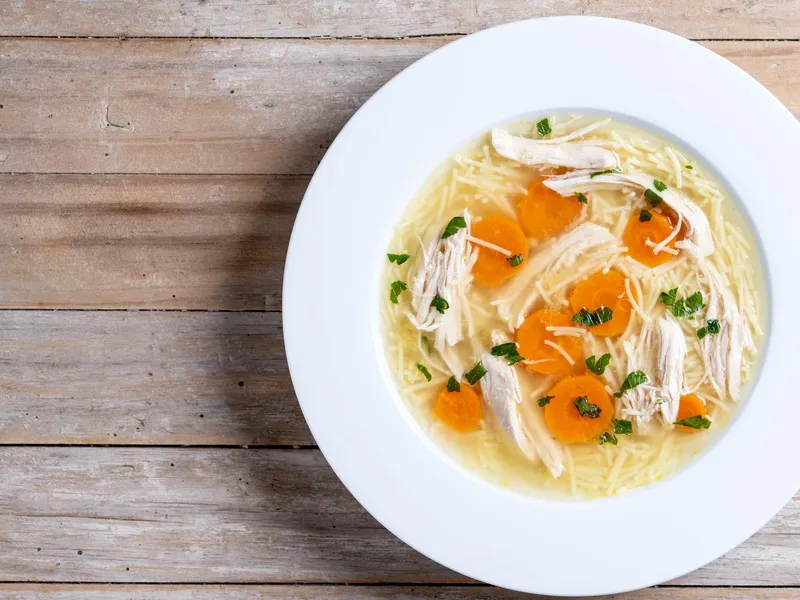
If you want a lighter one-pot meal for a cold night, try this homemade chicken noodle soup.
How to store, freeze and reheat
Fridge: cool the stew quickly by dividing it into shallow containers, and refrigerate it within 2 hours of cooking. The USDA says leftovers keep 3 to 4 days in the fridge.
Freezer: freeze the stew in airtight, freezer-safe containers for up to 3 months. The potatoes turn a little softer after thawing, but the stew is still good.
Thawing: thaw frozen stew overnight in the refrigerator. You can also use the microwave or a bowl of cold water, but then reheat it straight away.
Reheating: warm the stew on the stove over medium-low heat, stirring now and then, until it’s steaming and reaches 165°F on a food thermometer. Add a splash of broth or water if the gravy has thickened in the fridge.
Frequently asked questions
What is the best cut of beef for stew?
Beef chuck. It has enough fat and connective tissue to turn tender and juicy during a long simmer. Lean cuts like sirloin or round tend to turn dry and stringy.
Why is my beef stew meat tough?
Usually it hasn’t cooked long enough, or it boiled too hard. Keep the stew at a gentle simmer and keep cooking until a cube of beef is fork-tender, checking every 15 minutes.
Do you have to brown the beef first?
You don’t have to, but it makes a big difference to the flavor and color of the gravy. Browning also cooks the flour coating, which helps thicken the stew.
Can you make beef stew ahead of time?
Yes. Beef stew reheats very well and often tastes better the next day. Cool it quickly, refrigerate it for up to 3 to 4 days, and reheat it to 165°F.
Can you make beef stew without wine?
Yes. Replace the cup of red wine with another cup of beef broth. A teaspoon of red wine vinegar or Worcestershire sauce stirred in at the end adds back a little depth.
Recipe
Classic beef stew
- Prep
- 25 min
- Cook
- 2 hr 40 min
- Total
- 3 hr 15 min
- Makes
- 6 servings
Ingredients
For the beef
- 2 1/2 pounds (1.1 kg) beef chuck roast, trimmed and cut into 1 1/2-inch cubes
- 1 1/2 teaspoons kosher salt, plus more to taste
- 1/2 teaspoon black pepper
- 1/3 cup (40 g) all-purpose flour
- 2 tablespoons vegetable oil, plus more as needed
For the broth
- 1 large yellow onion, chopped
- 3 garlic cloves, minced
- 2 tablespoons tomato paste
- 1 cup (240 ml) dry red wine, or 1 cup more beef broth
- 4 cups (950 ml) beef broth
- 1 bay leaf
- 1 teaspoon dried thyme
For the vegetables
- 4 medium carrots, cut into 1-inch pieces
- 2 celery stalks, cut into 1/2-inch pieces
- 1 1/2 pounds (680 g) Yukon Gold potatoes, cut into 1 1/2-inch chunks
- 1/2 cup (75 g) frozen or fresh peas (optional)
Method
- 1 Pat the beef dry with paper towels. Season it with the salt and pepper, then toss it with the flour until lightly coated.
- 2 Heat the oil in a large Dutch oven or heavy pot over medium-high heat. Brown the beef in 2 or 3 batches, 3 to 4 minutes per side, until deep brown on most sides. Don't crowd the pot. Move each batch to a plate and add a little more oil if the pot looks dry.
- 3 Lower the heat to medium. Add the onion and cook for about 5 minutes, stirring and scraping up the browned bits, until soft.
- 4 Stir in the garlic and tomato paste and cook for 30 seconds. Pour in the wine (or extra broth) and scrape the bottom of the pot clean. Simmer for 2 minutes.
- 5 Add the broth, bay leaf, thyme and the browned beef with any juices. Bring to a gentle simmer, then lower the heat, cover and cook at a bare simmer for 1 hour 15 minutes.
- 6 Stir in the carrots, celery and potatoes. Cover and simmer gently for another 45 to 60 minutes, until the beef is fork-tender and the vegetables are tender when pierced. If the beef is still firm, keep simmering and check every 15 minutes.
- 7 If using peas, stir them in for the last 5 minutes. Remove the bay leaf, taste and adjust the salt and pepper, then let the stew rest off the heat for 10 minutes before serving.
Notes
- Keep the stew at a gentle simmer, with small bubbles breaking the surface. A hard boil toughens the beef and breaks up the potatoes.
- Refrigerate leftovers within 2 hours and eat them within 3 to 4 days. Reheat to 165°F.
- Freezes for up to 3 months. The potatoes soften a little after thawing.