How long to bake salmon at 400°F (and other temperatures)
Bake a 1-inch salmon fillet at 400°F for about 12 to 15 minutes. Times by thickness at 350, 400 and 425°F, from frozen, plus doneness checks and storage.
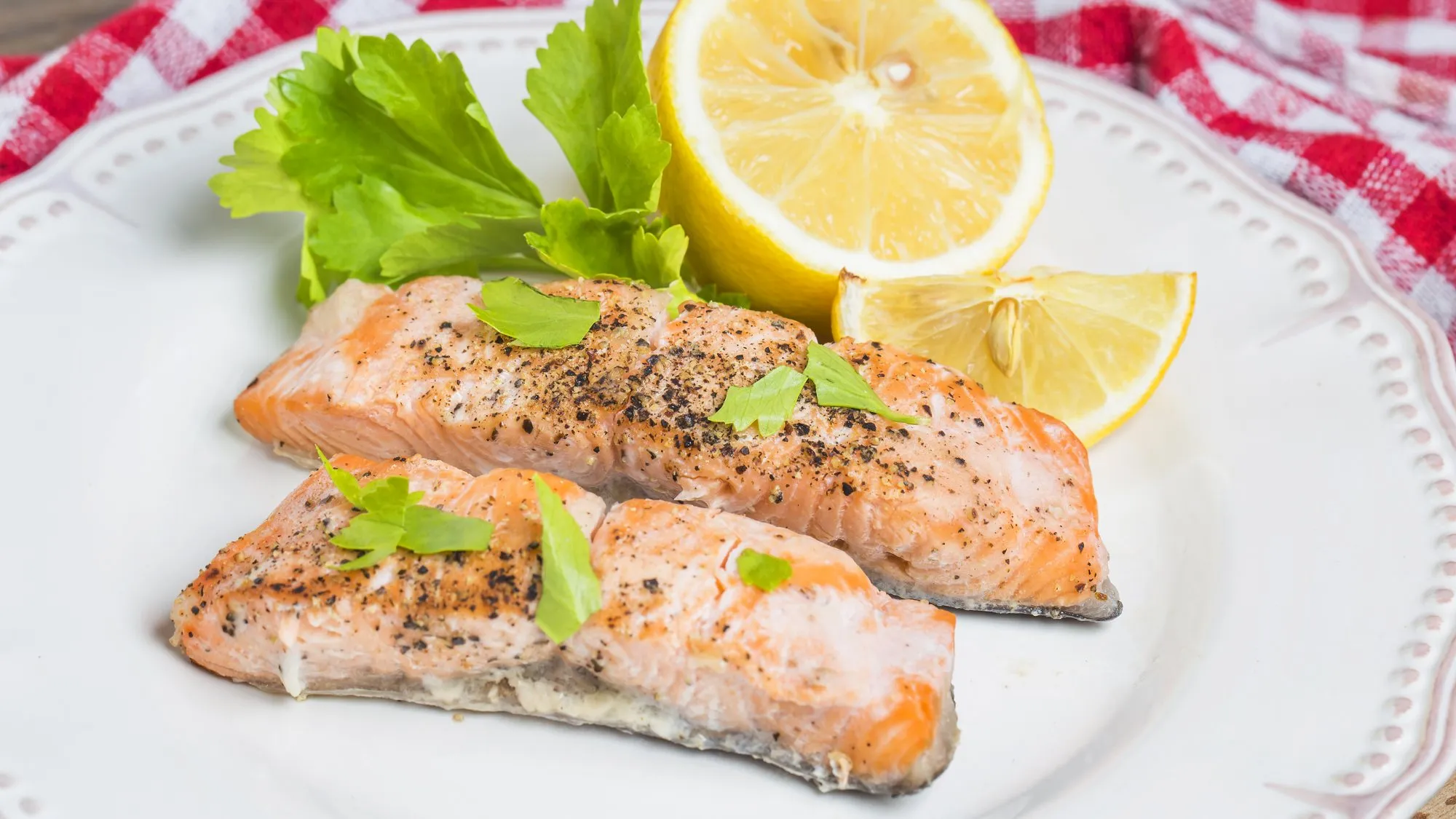
A 1-inch-thick salmon fillet bakes in about 12 to 15 minutes at 400°F. Thinner pieces finish sooner, thicker ones take longer, and the fish is done when the thickest part reaches 145°F, the USDA safe minimum for fish.
Treat the time as a prompt to start checking, not a fixed finish line. Salmon goes from tender to dry in a couple of minutes, so check the center a few minutes before the range ends.
Key takeaways
- At 400°F, a 1-inch fillet takes about 12 to 15 minutes. Start checking at 10 to 12.
- Thickness matters more than weight. Measure the thickest part of the fillet.
- The USDA safe minimum internal temperature for fish, including salmon, is 145°F.
- Frozen salmon can be baked without thawing, but it needs noticeably longer.
- Refrigerate cooked salmon within 2 hours and eat it within 3 to 4 days.
How long to bake salmon by thickness and oven temperature
These are starting estimates for thawed salmon in a fully preheated oven, on a lined baking sheet, uncovered. Measure the fillet at its thickest point.
| Cut and thickness | 350°F | 400°F | 425°F |
|---|---|---|---|
| Thin fillet, about ½ inch | 10 to 15 minutes | 8 to 10 minutes | 6 to 8 minutes |
| Standard fillet, about 1 inch | 18 to 25 minutes | 12 to 15 minutes | 10 to 14 minutes |
| Thick fillet, about 1½ inches | 22 to 28 minutes | 15 to 20 minutes | 12 to 16 minutes |
| Whole side, about 2 pounds | 25 to 35 minutes | 18 to 25 minutes | 15 to 22 minutes |
The ranges overlap on purpose. Our guide ranges for a 1-inch fillet are 12 to 15 minutes at 400°F, 10 to 14 at 425°F and 18 to 25 at 350°F, and ovens, pans and starting temperature all move the result. Fish straight from the refrigerator also takes a little longer than fish that has been out for a few minutes, so keep the first check early.
Which temperature should you choose? 400°F is the usual middle ground: fast enough that the fish stays moist, gentle enough that it doesn’t overcook before the center is done. 425°F gives a little more browning on the surface. 350°F is slower and more forgiving, which suits thick fillets and whole sides.
How to bake salmon at 400°F
For four 6-ounce (170 g) fillets, you need:
- 4 salmon fillets, about 1 inch thick, skin on or off
- 1 tablespoon olive oil
- ½ teaspoon kosher salt
- ¼ teaspoon black pepper
- Lemon wedges, to serve
- Heat the oven to 400°F with the rack in the middle. Line a rimmed baking sheet with parchment or foil.
- Pat the salmon dry with paper towels. Dry fish browns better and doesn’t steam.
- Set the fillets on the sheet, skin side down if they have skin, spaced apart. Brush with the oil and season with the salt and pepper.
- Bake 12 to 15 minutes. Check the thickest part at 10 to 12 minutes with a food thermometer.
- Take the fish out when the thickest part reads 145°F, or when it’s opaque and flakes easily with a fork. Serve with lemon.
For a whole side, use the same method on a larger sheet and start checking at about 18 minutes. If one end is thin, tuck it under or take that end off the sheet early.
How to tell when salmon is done
Use a thermometer and look at the fish:
- Temperature. Slide an instant-read thermometer sideways into the thickest part of the fillet. USDA lists 145°F as the minimum internal temperature for fish.
- Appearance. FoodSafety.gov describes cooked fish as opaque, with flesh that separates easily with a fork. Raw salmon is translucent and deep pink to orange; cooked salmon turns lighter and opaque.
- White film. As salmon cooks, a white protein called albumin can seep out onto the surface. It’s a sign the muscle is tightening, and a lot of it usually means the salmon is getting well done, so it’s another reason to check early.
Aim for 145°F in the thickest part every time. Some cooks prefer to stop lower for a softer texture, but that is below the USDA safe minimum.
Skin on or skin off
Both bake in the same time at the same thickness. With skin-on fillets, place them skin side down: the skin protects the flesh from the hot pan and peels away easily after cooking. For skin-off fillets, use parchment or lightly oil the pan so the fish lifts cleanly.
Foil, parchment or uncovered
- Uncovered gives the most browning and a firmer surface.
- Parchment keeps the fish from sticking and makes cleanup easy, with only a little extra moisture.
- Foil, folded into a loose packet, traps steam for a softer, moister result and suits fillets with sauce or vegetables. It can add a few minutes to the time, so check the thickest part.
Can you bake salmon from frozen?
Yes. You can bake salmon straight from the freezer, and it’s a good fallback when you forgot to thaw. Heat the oven to 425°F, brush off any ice glaze, pat the fish dry, season it and bake. Frozen fillets of about 1 inch usually need 20 to 30 minutes, and covering the pan with foil for the first part helps them cook through evenly. At 400°F, start checking at around 20 to 25 minutes. Always confirm 145°F in the thickest part.
If you have time, thawing is easy. FoodSafety.gov says to thaw seafood gradually in the refrigerator overnight, or, for a quick thaw, to seal it in a plastic bag and submerge it in cold water, changing the water every 30 minutes. Thawed fillets cook faster and more evenly.
Seasoning ideas
Salmon is good with very little. Keep the oil, salt and pepper, then add any of these before baking:
- Lemon slices and fresh dill or parsley
- 1 minced garlic clove mixed with 1 tablespoon melted butter
- 1 tablespoon Dijon mustard and 1 teaspoon honey, brushed over the top
- A pinch of paprika or garlic powder
Sugary glazes can brown quickly at 425°F, so add them in the last few minutes, or bake at 400°F.
How to store and reheat cooked salmon
- Cool it. Refrigerate cooked salmon within 2 hours, or within 1 hour if the room is above 90°F.
- Fridge. FSIS says to store cooked seafood in the refrigerator for 3 to 4 days, in a covered, shallow container at 40°F or below.
- Freezer. For best quality, FSIS recommends freezing cooked fish for up to 3 months. Frozen food stays safe indefinitely, but flavor and texture decline.
- Reheat. Heat leftovers to 165°F, as FSIS advises for all leftovers. Cover the dish and add a small splash of water so the fish doesn’t dry out.
- Raw salmon. Keep raw fish in the refrigerator for only 1 to 2 days before cooking or freezing it.
Frequently asked questions
How long do you bake salmon at 400 degrees?
About 12 to 15 minutes for a thawed 1-inch fillet. A ½-inch piece needs about 8 to 10 minutes, and a 1½-inch piece 15 to 20. Check the thickest part with a thermometer.
Is 15 minutes at 400°F too long for salmon?
Not for a thick fillet, but it may be too long for a thin one, which can dry out in 10 minutes. Start checking early, and take the fish out when the center reaches 145°F.
Should I bake salmon at 350°F or 400°F?
400°F is faster and browns the surface slightly. 350°F is gentler and more forgiving, but it takes longer. Either works if you check the center and stop at 145°F.
Do I bake salmon covered or uncovered?
Uncovered gives a lightly browned top. Covered with foil gives a softer, steamier texture. Check the center either way, because thickness drives the time.
What internal temperature should salmon be?
145°F, measured in the thickest part. That is the USDA safe minimum for fish, and FoodSafety.gov gives the same figure for most seafood.
Should salmon be baked skin side up or down?
Skin side down. The skin shields the flesh from the pan, and the cooked fish lifts off the skin easily when you serve it.
Do I need to wash salmon before baking?
There’s no need. Pat it dry with paper towels instead, which helps the surface brown, and wash your hands, the board and utensils with soap and hot water after handling raw fish.
How long does baked salmon keep in the fridge?
3 to 4 days in a covered container at 40°F or below, if it went into the refrigerator within 2 hours of cooking.