Chicken internal temperature: when breasts, thighs and wings are done
Chicken is safe at 165°F in every cut, measured in the thickest part. Temperatures for breasts, thighs, wings and ground chicken, plus where to probe.
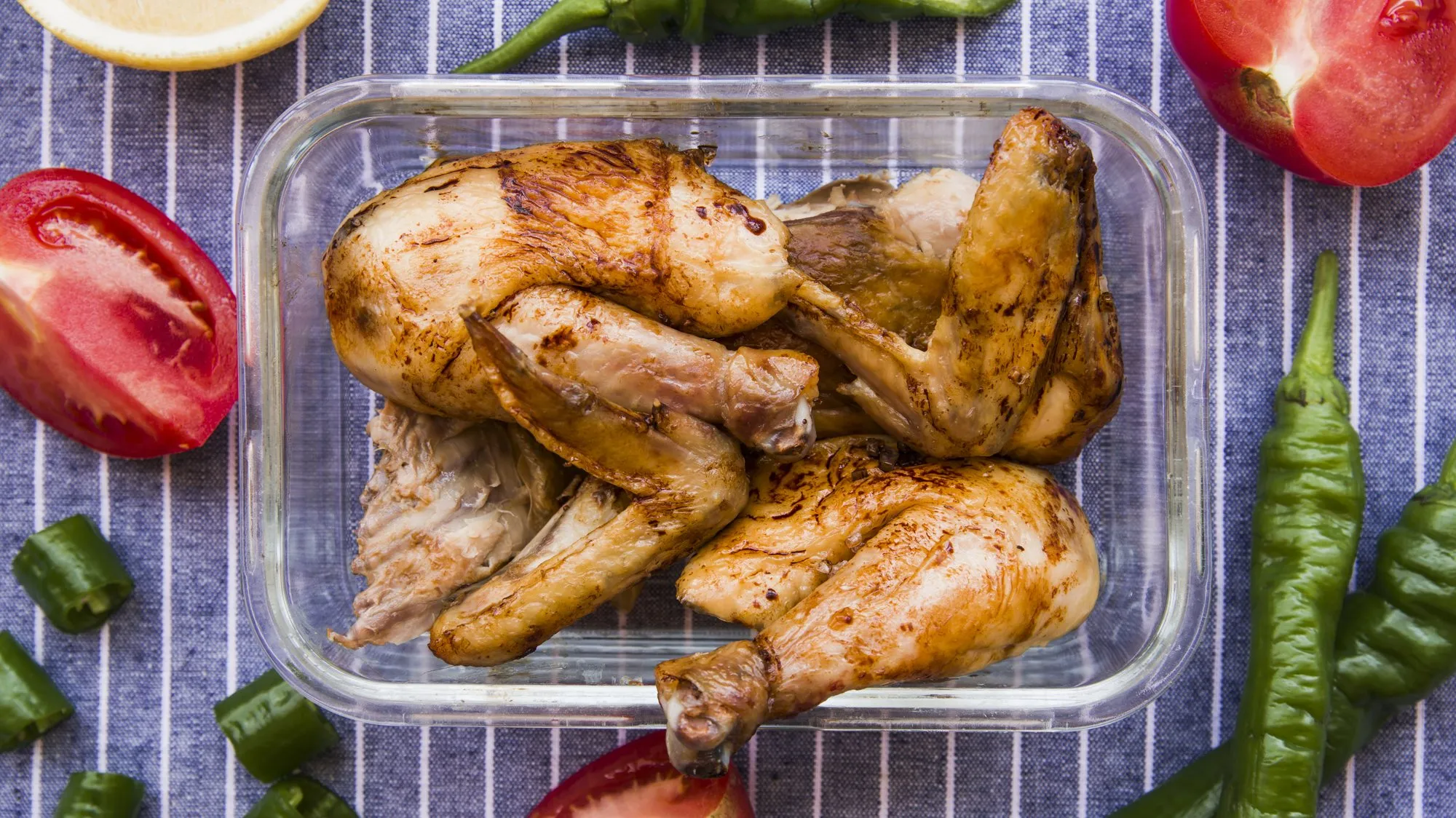
Chicken is safe to eat when its internal temperature reaches 165°F (74°C), and that number is the same for breasts, thighs, drumsticks, wings, whole birds and ground chicken. Check it with a food thermometer in the thickest part of the meat, away from the bone.
The USDA calls 165°F the safe minimum. Some cuts taste better when cooked a bit hotter, which is covered below, but you never need to go lower than 165°F.
Key takeaways
- The USDA safe minimum internal temperature for all poultry is 165°F, including breasts, thighs, wings, ground chicken and stuffing.
- Measure with a food thermometer in the thickest part, keeping the tip out of the bone.
- Color and clear juices do not prove chicken is done. Chicken can stay pink and still be safe, and it can look done before it is.
- Thighs and drumsticks are often cooked to 175°F or higher for a more tender texture. That is a choice about taste, and 165°F is still the safety minimum.
Chicken internal temperature chart
| Cut | USDA safe minimum | Where to check | Often cooked to for texture |
|---|---|---|---|
| Breasts (bone-in or boneless) | 165°F | Thickest part of the breast | 165°F |
| Thighs | 165°F | Thickest part, away from the bone | 175°F to 185°F |
| Drumsticks | 165°F | Thickest part, away from the bone | 175°F to 185°F |
| Wings | 165°F | Thickest, meatiest part | 165°F or a little higher |
| Tenders and cutlets | 165°F | Center of the thickest piece, probe in from the side | 165°F |
| Whole chicken | 165°F | Thickest part of the breast, plus the innermost part of the thigh and wing | 165°F in all three spots |
| Ground chicken (burgers, meatballs, meatloaf) | 165°F | Center of the patty or meatball | 165°F |
| Stuffing, casseroles and reheated leftovers | 165°F | Center of the dish | 165°F |
The USDA safe temperature chart puts all poultry (breasts, whole birds, legs, thighs, wings, ground poultry, giblets and stuffing) at 165°F, and its lines for leftovers and casseroles are 165°F too. The last column is not USDA guidance. It shows what many cooks prefer, and the next section explains why.
Safe temperature versus best texture
The safe minimum and the best-tasting temperature are two different things.
Breast meat is lean, so it can turn dry and firm if it goes well past 165°F. Take it off the heat as soon as the thickest part reads 165°F.
Thighs, drumsticks and wings have more fat and connective tissue. Connective tissue softens into gelatin the longer the meat cooks, so dark meat often gets more tender at higher temperatures. Many cooks take thighs and drumsticks to about 175°F to 185°F for more tender meat, and some go higher, though past about 210°F the meat tends to turn stringy. That is a common cook preference, not a safety requirement; the USDA minimum stays 165°F.
If you cook thighs hotter, that is fine, because they are still safe. If you like them firmer, you can stop at 165°F. USDA itself notes that consumers may choose to cook poultry to higher temperatures as a matter of personal preference.
Where to put the thermometer
An instant-read digital thermometer gives a fast, accurate reading. Wherever you check, aim for the thickest part of the meat and keep the tip away from bone, fat pockets and the pan, which can all give a false reading.
- Breasts. Insert the probe into the thickest part, aiming for the center. If the breast is thin, slide the probe in from the side.
- Thighs and drumsticks. Insert it into the thickest part, near but not touching the bone. Touching bone gives a wrong reading.
- Wings. Use the meatiest section. Wings are small, so a thin probe helps. If a wing is too small to measure accurately, check a bigger piece from the same batch.
- Whole chicken. USDA says to check the innermost part of the thigh and wing and the thickest part of the breast. All three should reach 165°F.
- Ground chicken. Check the center of a patty or meatball. For a loaf or other larger piece, check more than one spot.
- Stuffing. Stuffing cooked inside the bird should also reach 165°F at its center.
If a reading is under 165°F, keep cooking and check again after a few minutes. Wash the probe with hot, soapy water after it has touched raw or undercooked chicken.
Why color and juices are not reliable
Many people cut into chicken and check whether the juices run clear or the meat has lost its pink color. USDA says that is not enough: only a food thermometer can show that chicken has reached a safe temperature throughout.
Safely cooked chicken can stay pink. USDA explains that the pink color may be due to hemoglobin in the tissues, which can form a heat-stable color, and that smoking or grilling can also cause this reaction. It happens more often in young birds.
The reverse is also true. Chicken can look and feel done on the outside while the center is still below 165°F.
What if the temperature drops after you take it off the heat?
Chicken keeps cooking for a short time after it leaves the oven, grill or pan, because the heat at the surface moves inward. This is called carryover cooking. USDA’s instruction is to cook food to the safe minimum temperature before taking it off the heat, so check the thermometer while the chicken is still cooking, and do not pull it early counting on carryover to finish the job.
Resting is not a safety requirement for chicken. The USDA chart lists a 3-minute rest only for whole cuts of beef, pork, veal and lamb. A short rest of a few minutes helps the juices settle, but the chicken has to have reached 165°F before you take it off the heat.
Can chicken be safe below 165°F?
USDA’s guidance is 165°F, and that is the number to use at home. Cooking chicken to a lower temperature and holding it there for a long enough time can also kill bacteria, but that depends on tightly controlled time-and-temperature combinations, and a quick thermometer reading below 165°F does not show that the chicken is safe. Without that control, follow the 165°F rule.
Chicken pies, casseroles and leftovers
Pies, casseroles and baked dishes need to reach 165°F in the center. That applies to a dish like our chicken and leek pie, where the filling needs to be at that temperature, not just the crust browned. Leftover chicken also needs to reach 165°F when you reheat it, as measured with a food thermometer.
Refrigerate cooked chicken within 2 hours of cooking, or within 1 hour if the air temperature is above 90°F. USDA says leftovers keep in the refrigerator for 3 to 4 days.
Frequently asked questions
What temperature should chicken be cooked to in the oven?
Cook it until the thickest part reaches 165°F. The oven setting only controls how fast that happens, so use the thermometer, not the clock, to decide when it is done.
Is chicken safe at 145°F or 155°F?
Not by the USDA’s guidance. The USDA safe minimum for poultry is 165°F. Cooking below that depends on holding the chicken at a lower temperature for a controlled length of time, which a quick reading does not show.
Is chicken done at 165°F or 180°F?
It is safe at 165°F. Breasts are best at 165°F because they dry out as they go higher. Thighs and drumsticks are safe at 165°F too, but many people prefer them at around 175°F to 185°F because the meat is more tender.
Where do I check the temperature of a whole chicken?
Check the thickest part of the breast and the innermost part of the thigh and wing. Keep the tip away from bone. All three spots should reach 165°F.
Is it safe if chicken is a little pink?
If the thickest part has reached 165°F on a food thermometer, it is safe, even if some pink remains. Color alone cannot tell you whether chicken is done.
What is chicken’s safe internal temperature in Celsius?
74°C, which is the USDA’s 165°F converted and rounded.
Do I need a special thermometer?
Any accurate food thermometer will do. A digital instant-read model is quick and has a thin probe, which makes it easier to check small pieces like wings and tenders.