How long to bake chicken breast at 350, 375, 400 and 425°F
Bake a 6- to 8-ounce boneless chicken breast for 18 to 22 minutes at 400°F, or 25 to 30 at 350°F, until it reaches 165°F. Times for every size and temperature.
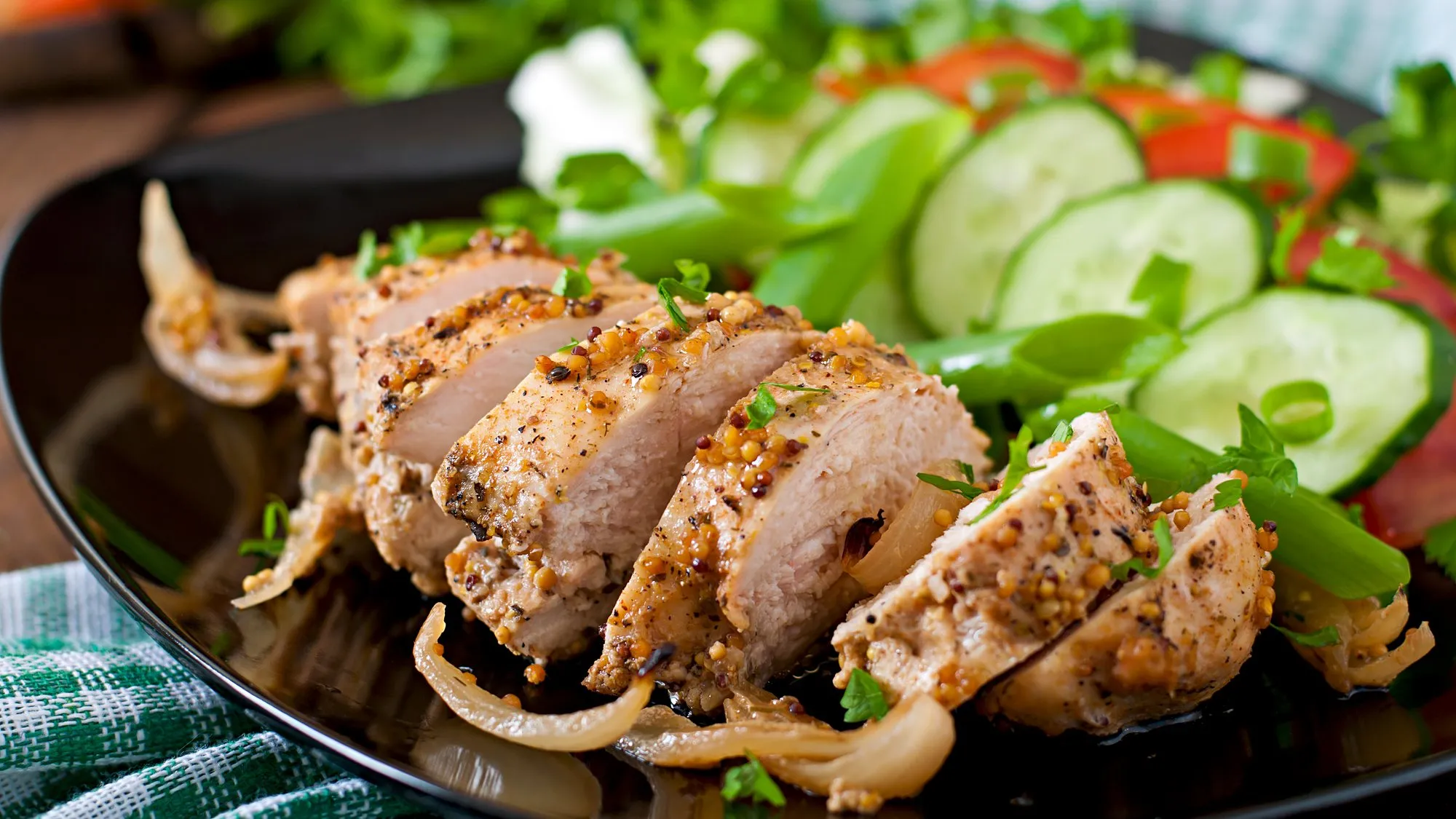
A boneless, skinless chicken breast of 6 to 8 ounces takes about 18 to 22 minutes at 400°F, 20 to 25 minutes at 375°F, or 25 to 30 minutes at 350°F. Whatever the oven temperature, the chicken is done when the thickest part reaches 165°F on a food thermometer, the safe minimum for all poultry according to the USDA Food Safety and Inspection Service (FSIS).
Times are a starting point. The thickness of the breast, whether it has a bone and how accurate your oven is all change the finish time, so start checking at the low end of each range.
Key takeaways
- A 6- to 8-ounce boneless breast bakes in 15 to 20 minutes at 425°F, 18 to 22 at 400°F, 20 to 25 at 375°F and 25 to 30 at 350°F.
- Bone-in, skin-on breasts take longer: about 35 to 45 minutes at 375°F.
- Thickness matters more than weight. Pound thick ends to an even thickness so the breast cooks evenly.
- Chicken is safe at 165°F in the thickest part. Color and juices aren’t reliable signs.
- Rest the chicken for 5 minutes before slicing so less juice runs out.
Chicken breast baking times by oven temperature
These times are for thawed, boneless, skinless breasts of 6 to 8 ounces, baked in a single layer.
| Oven temperature | Boneless breast (6 to 8 oz) | Large boneless breast (9 to 10 oz) |
|---|---|---|
| 350°F (175°C) | 25 to 30 minutes | 30 to 35 minutes |
| 375°F (190°C) | 20 to 25 minutes | 25 to 30 minutes |
| 400°F (200°C) | 18 to 22 minutes | 22 to 26 minutes |
| 425°F (220°C) | 15 to 20 minutes | 20 to 24 minutes |
For comparison, the USDA’s own roasting chart lists 20 to 30 minutes at 350°F for a small (4-ounce) boneless breast half and 30 to 40 minutes at 350°F for a 6- to 8-ounce bone-in breast half. Breasts sold in US supermarkets are often much larger than 4 ounces, which is why the times above run longer.
Which temperature should you use?
- 350°F is gentle and gives you a wide window to check the chicken. It’s a good choice when the breast is baked in a sauce or with a topping that could scorch.
- 375°F is a middle ground and works well when you’re baking breasts of different sizes together and checking each one.
- 400°F browns the outside a little more and is the most common choice for simple seasoned chicken.
- 425°F is the fastest. It suits thin breasts and cutlets, but thick pieces can dry out on the outside before the center is done.
Bone-in, skin-on chicken breasts
The bone slows down cooking near the center, so bone-in breasts need noticeably longer. Bake bone-in, skin-on breasts at 375°F to 400°F for about 35 to 45 minutes, depending on size. Very large split breasts (over 12 ounces) can need 50 minutes or more.
Pat the skin dry before seasoning and bake skin-side up with space between pieces so the skin crisps. When you check the temperature, keep the probe out of contact with the bone, which reads hotter than the meat around it.
Adjust for thickness
A thick breast takes longer to cook through than a thinner one of the same weight. Many breasts are wedge-shaped, so the thin end overcooks while the thick end catches up.
To even them out, put the breast between two sheets of plastic wrap or parchment and pound the thick end with a meat mallet or rolling pin until the whole piece is about 3/4 inch thick. You can also slice very thick breasts in half horizontally to make two thinner cutlets.
| Cut | At 400°F |
|---|---|
| Thin-sliced cutlets (about 1/2 inch) | 10 to 15 minutes |
| Pounded breast (3/4 inch) | 15 to 20 minutes |
| Regular boneless breast (6 to 8 oz) | 18 to 22 minutes |
| Large boneless breast (9 to 10 oz) | 22 to 26 minutes |
| Bone-in, skin-on breast | 35 to 45 minutes |
Chicken straight from the fridge takes a few minutes longer than chicken that has sat out briefly. Don’t leave raw chicken at room temperature for more than 2 hours, though, and don’t bake chicken from frozen using these times: frozen chicken takes about 50% longer.
A simple baked chicken breast method
This basic method serves 4 and works at any of the temperatures above.
- Heat the oven to 400°F. Pat 4 boneless, skinless chicken breasts (6 to 8 ounces each) dry with paper towels and even out any thick ends.
- Arrange them in a single layer in a baking dish or on a rimmed sheet pan. Rub with 1 tablespoon olive oil, then season both sides with 3/4 teaspoon kosher salt, 1/2 teaspoon black pepper and 1/2 teaspoon paprika.
- Bake for 18 minutes, then check the thickest part of each breast. Keep baking, checking every 2 to 3 minutes, until each piece reaches 165°F.
- Move the chicken to a clean plate, cover loosely with foil and rest for 5 minutes before slicing across the grain.
Wash your hands, the cutting board and any utensils that touched raw chicken with hot, soapy water before using them for anything else. Don’t put the cooked chicken back on the plate that held it raw.
How to keep baked chicken breast juicy
- Even thickness is the biggest single fix. A flat, even breast cooks through before the outside dries out.
- A little oil on the surface helps the seasoning stick and the outside brown.
- Don’t crowd the pan. Leave space between pieces so hot air circulates and the chicken roasts instead of steaming.
- Pull it at 165°F. Every extra degree past that dries the meat. Check a few minutes before you think it’s done.
- Rest before slicing. Five minutes lets the juices settle, so less ends up on the cutting board.
For other cuts, see how long to bake chicken thighs. Thighs have more fat and stay moist at higher temperatures.
How to check doneness
Use a food thermometer. Push an instant-read probe into the thickest part of the breast from the side, so the tip sits in the center of the meat, not touching the pan or a bone. Check each piece when they vary in size.
USDA FSIS lists 165°F as the safe minimum internal temperature for poultry. Clear juices, white meat and a firm feel aren’t reliable signs on their own: chicken can look done before it reaches a safe temperature. If the reading is below 165°F, return the chicken to the oven and check again after a few minutes. Our chicken internal temperature guide covers every cut.
Storing and reheating leftovers
Refrigerate leftover chicken within 2 hours of baking (1 hour if it’s above 90°F), in shallow covered containers. USDA FSIS says cooked chicken keeps 3 to 4 days in the fridge and holds its best quality for about 4 months in the freezer. Reheat leftovers to 165°F.
Slicing the chicken before chilling helps it cool quickly and reheat evenly. For the full details, see how long cooked chicken lasts.
Frequently asked questions
How long do you bake chicken breast at 400 degrees?
Bake a 6- to 8-ounce boneless, skinless breast at 400°F for about 18 to 22 minutes, and a larger 9- to 10-ounce breast for 22 to 26 minutes. It’s done when the thickest part reaches 165°F.
Is it better to bake chicken breast at 375 or 400?
Both work. 400°F is a few minutes faster and browns the outside a little more, while 375°F gives you a slightly wider window before the chicken dries out. Either way, use a thermometer to check for 165°F.
How long does chicken breast take at 350 degrees?
A 6- to 8-ounce boneless breast takes about 25 to 30 minutes at 350°F. Bone-in breast halves of the same weight take about 30 to 40 minutes, according to the USDA roasting chart.
Should I cover chicken breast with foil when baking?
You don’t need to. Baking uncovered lets the outside brown. If the top is browning too fast before the center is done, cover it loosely with foil for the last few minutes.
Why is my baked chicken breast dry?
It was most likely overcooked, or the breast was uneven, so the thin end overcooked while the thick end finished. Pound it to an even thickness, check the temperature early and take it out as soon as it reaches 165°F.