How long do eggs last in the fridge, and how to tell if they're bad
Raw eggs in the shell keep 3 to 5 weeks in the fridge, hard-boiled eggs 1 week. Storage times, freezing, the float test and signs an egg has gone bad.
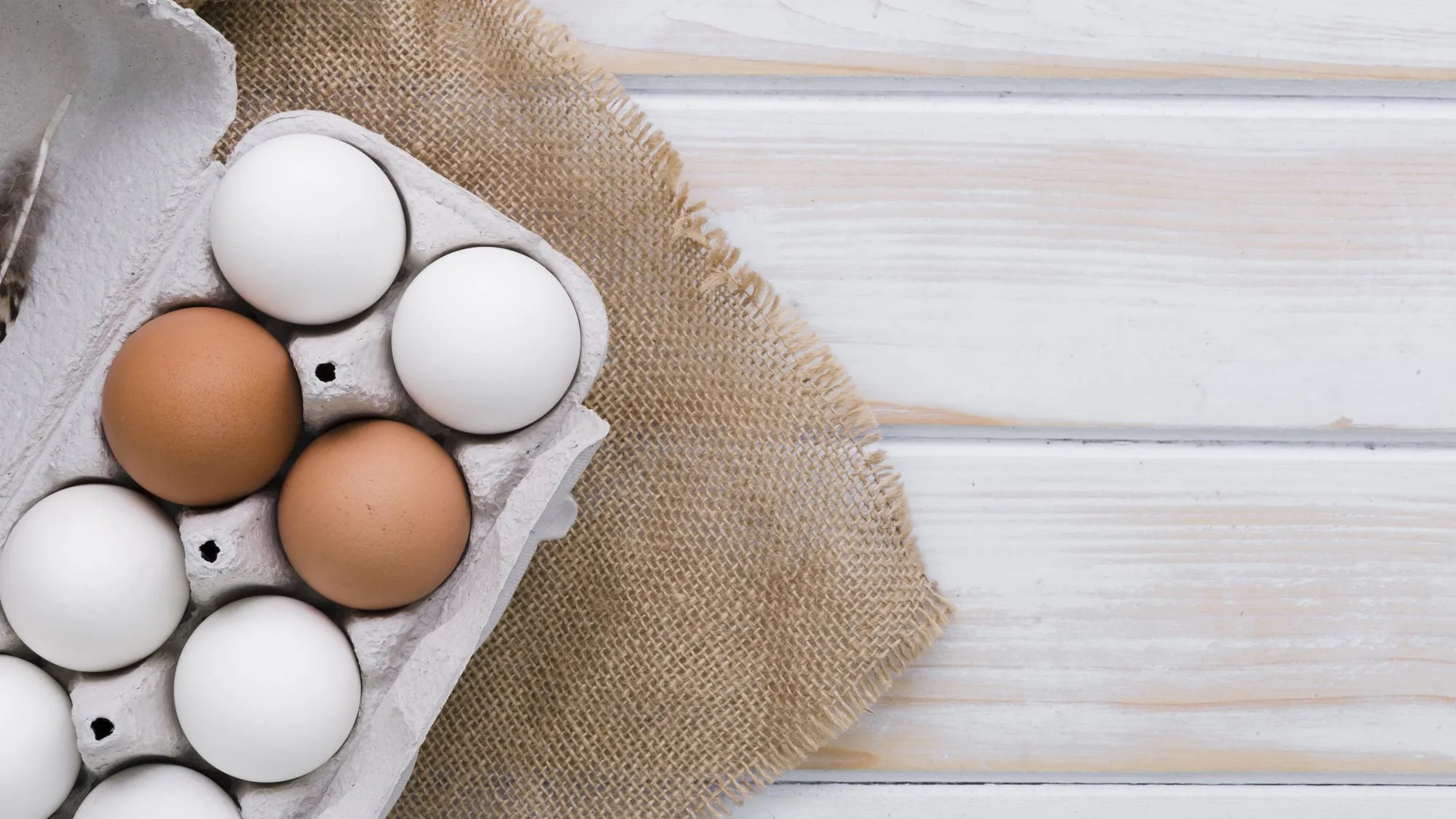
Raw eggs in the shell keep for 3 to 5 weeks in a refrigerator set at 40°F or below. Hard-boiled eggs keep for 1 week, and raw egg whites or yolks that you’ve separated keep for 2 to 4 days.
Those times come from the USDA Food Safety and Inspection Service (FSIS), FoodSafety.gov and the FDA. They assume the eggs stayed cold the whole time: refrigerated eggs shouldn’t sit out for more than 2 hours.
Key takeaways
- Keep eggs at 40°F or below, in their carton, on a shelf inside the fridge rather than in the door.
- Raw eggs in the shell: 3 to 5 weeks. Hard-boiled eggs: 1 week. Separated raw whites or yolks: 2 to 4 days.
- Don’t leave refrigerated eggs out for more than 2 hours (1 hour if the air is above 90°F).
- Don’t freeze eggs in the shell. Beat them first, then freeze.
- The float test shows an egg’s age, not whether it’s safe. Crack a doubtful egg into a bowl and check it.
How long eggs last: fridge, freezer and counter
| Egg or egg dish | Refrigerator (40°F or below) | Freezer (0°F or below) | Room temperature |
|---|---|---|---|
| Raw eggs in the shell | 3 to 5 weeks | Do not freeze in the shell | 2 hours at most (1 hour above 90°F) |
| Raw egg whites | 2 to 4 days | About 12 months | 2 hours at most (1 hour above 90°F) |
| Raw egg yolks | 2 to 4 days | Don’t freeze well | 2 hours at most (1 hour above 90°F) |
| Hard-boiled (hard-cooked) eggs | 1 week | Do not freeze | 2 hours at most (1 hour above 90°F) |
| Casseroles made with eggs | 3 to 4 days after baking | 2 to 3 months after baking | 2 hours at most (1 hour above 90°F) |
| Quiche | 3 to 4 days after baking | 1 to 2 months after baking | 2 hours at most (1 hour above 90°F) |
| Custard and chiffon pies | 3 to 4 days after baking | Do not freeze | 2 hours at most (1 hour above 90°F) |
Freezer times are about quality, not safety. Food kept at 0°F or below stays safe.
For a couple of egg dishes, the official sources differ, so the cautious number is used here. FSIS gives quiche 3 to 4 days in the fridge and 1 to 2 months in the freezer, while the FoodSafety.gov chart says 3 to 5 days and 2 to 3 months. Egg casseroles are 3 to 4 days in the fridge and 2 to 3 months frozen on both.
The 1-hour limit above 90°F is the general rule for perishable foods from FSIS and the FDA. FSIS’s egg page itself states the 2-hour limit.
What the date on the carton means
The date on a carton is not a safety deadline. FSIS says egg processors print “code dates” mainly for rotating stock. If a “sell by” or “EXP” date is used on USDA-graded eggs, it can’t be more than 30 days after the eggs were packed. A “use by” or “best before” date can’t be more than 45 days after packing, and it tells you how long the eggs should keep their quality.
In practice, use the carton date as a guide to quality and the 3-to-5-week figure as the storage rule, with the eggs kept cold the entire time.
How to store eggs
- Buy them cold. FSIS says to buy eggs from a refrigerated case and to choose clean, uncracked shells.
- Get them into the fridge fast. Take eggs straight home and refrigerate them as soon as you can.
- Keep the fridge at 40°F or below. An appliance thermometer is the only way to be sure.
- Leave them in the carton. FSIS says to keep them in the carton in the coldest part of the fridge, not in the door. The FDA agrees that the door is warmer.
- Don’t wash them. FSIS says washing eggs at home isn’t necessary and isn’t recommended, because wash water can be drawn into the egg through the shell. Commercial eggs are already washed and sanitized.
- Keep them cold. A cold egg left out can sweat, which helps bacteria move into the egg, and any Salmonella on or in the egg will multiply at room temperature.
Pasteurized in-shell eggs have been treated to destroy Salmonella, so they don’t have to be refrigerated, but FSIS says refrigerating them still helps them keep their quality.
Hard-boiled eggs
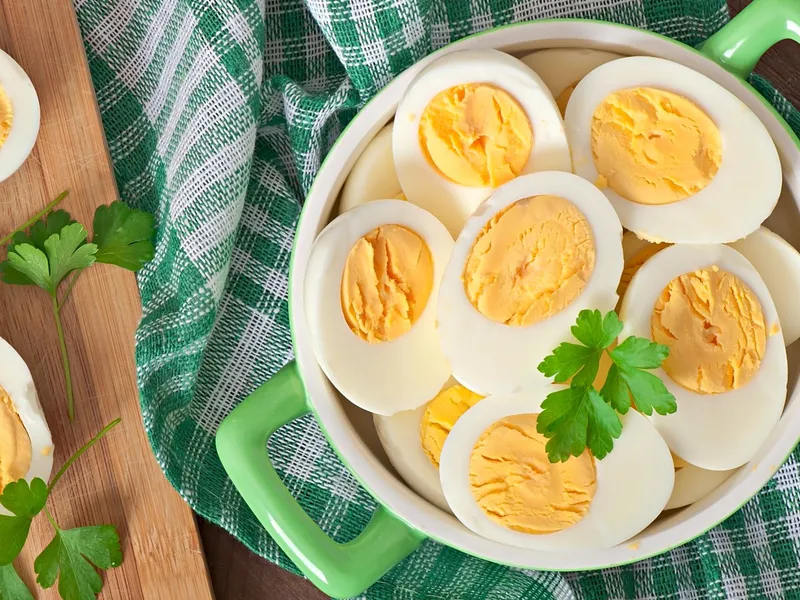
Hard-cooking an egg leaves a thin layer of water on the cooked egg under the shell, which gives bacteria a good place to grow. That’s why hard-cooked eggs spoil faster than raw ones. FSIS says to refrigerate them within 2 hours of cooking and use them within a week.
Raw whites and yolks, and egg mixtures
Store separated whites or yolks in a covered container in the fridge for 2 to 4 days. If you’ve mixed raw eggs into a dish, FSIS says to cook it immediately, or refrigerate it and cook it within 24 hours.
How to freeze eggs
Never freeze eggs in their shells, since they can crack as the contents expand. FoodSafety.gov says to beat the yolks and whites together, then freeze. NDSU Extension gives the details:
- Whole eggs: Mix the yolks and whites thoroughly, but don’t whip in air. To prevent graininess, add 1 tablespoon of sugar or ½ teaspoon of salt per cup of whole eggs, depending on how you’ll use them. Strain, pour into a container leaving ½ inch of headspace, seal and freeze. Or measure 3 tablespoons into each cube of an ice cube tray, freeze solid, then bag the cubes. Three tablespoons equals one whole egg.
- Egg whites: Gently mix, strain and freeze with ½ inch of headspace. Two tablespoons of the mixture equals one egg white. FoodSafety.gov lists about 12 months in the freezer.
- Egg yolks: These don’t freeze well on their own. NDSU says to stir them gently and add 2 tablespoons of sugar or 1 teaspoon of salt per cup of yolks, then strain and freeze. One tablespoon of the mixture equals one yolk.
Label each container with the date and the number of eggs, and with whether you added salt or sugar, so you know whether it suits a sweet or savory dish. Thaw eggs in the refrigerator and use them soon after thawing. NDSU says not to refreeze them.
If an egg in its shell freezes by accident, FoodSafety.gov says to keep it frozen, then thaw it in the refrigerator and use it right away once thawed. Throw away any frozen egg with a broken shell.
How to tell if an egg has gone bad
Crack the egg into a clean bowl before you use it, not directly into your batter, so one bad egg doesn’t ruin the rest.
- Smell. FSIS says a spoiled egg has an unpleasant odor when you break open the shell, whether it’s raw or cooked.
- Pink or iridescent white. FSIS says this indicates spoilage from Pseudomonas bacteria. Throw it away.
- Cracks. Bacteria can get in through cracks in the shell, and FSIS says never to buy cracked eggs. If an egg is already cracked in the carton, it’s safest to throw it away. FSIS says eggs that crack during hard cooking are safe.
- Mold, slime or a sour smell on hard-boiled eggs or the shell. Throw them away.
Some things that look odd are normal, according to FSIS: a blood spot isn’t a sign the egg is unsafe, and a cloudy white means the egg is very fresh. A clear white is a sign the egg is aging. A green ring around a hard-cooked yolk comes from overcooking and is safe to eat.
The float test
The float test measures age, not safety. Over time, moisture and carbon dioxide escape through the shell’s pores and more air gets in, so the air cell inside the egg grows. FSIS says an egg can float in water when its air cell has grown enough to keep it buoyant. That means the egg is of poor quality, but “it may be perfectly safe to use.”
So a floating egg tells you the egg is old. It doesn’t tell you it’s bad. The way to decide is to crack it into a bowl and check for an off odor or an unusual appearance, as above.
The test also can’t prove an egg is safe. FSIS notes that clean, uncracked, fresh shell eggs can contain Salmonella Enteritidis, and an egg that sinks, smells normal and looks fine can still carry it. What protects you is keeping eggs cold and cooking them until the yolks and whites are firm.
Cooking and reheating
- Cook eggs until the yolk and white are firm. Scrambled eggs shouldn’t be runny.
- Cook casseroles and other egg dishes to 160°F, checked with a food thermometer.
- Reheat leftover egg dishes such as quiche to 165°F before serving.
- FSIS advises everyone against eating raw or undercooked eggs. Infants, young children, older adults, pregnant women and people with weakened immune systems are at higher risk. In-shell pasteurized eggs can be used without cooking.
Frequently asked questions
Can you eat eggs after the expiration date?
Possibly. The date is about quality and stock rotation. If the eggs have been refrigerated at 40°F or below the whole time and it has been less than 5 weeks since you bought them, they’re within FSIS’s storage window. Crack each egg into a bowl and check it first.
Are eggs OK if they were left out overnight?
No. Refrigerated eggs shouldn’t be left out for more than 2 hours. Throw them away.
How long do hard-boiled eggs last?
One week in the fridge. FSIS says to refrigerate them within 2 hours of cooking. Don’t freeze them.
Do eggs need to be refrigerated?
In the US, yes. Commercial eggs are washed and carry a “keep refrigerated” label. Once eggs are cold, they need to stay cold, because a cold egg that warms up can sweat and let bacteria into the shell.
Can you freeze eggs?
Yes, but not in the shell. Beat the yolks and whites together, add a little salt or sugar to prevent graininess, and freeze in a sealed container. Thaw in the fridge.
How can I tell if an egg is still fresh?
Crack it into a bowl. A fresh egg has a cloudy, thick white and a high, round yolk, while an older egg has a thinner, clearer white and a flatter yolk. That’s about quality. For safety, use the storage times above.
What can I use if I’m out of eggs?
For baking, there are good swaps for most recipes. See our guide to egg substitutes for baking.