Can you freeze cheese? Which kinds freeze well and how to thaw them
Yes, hard and semi-hard cheeses freeze well for about 6 months, though they turn crumbly. Which cheeses to skip, how to wrap and thaw them, and fridge times.
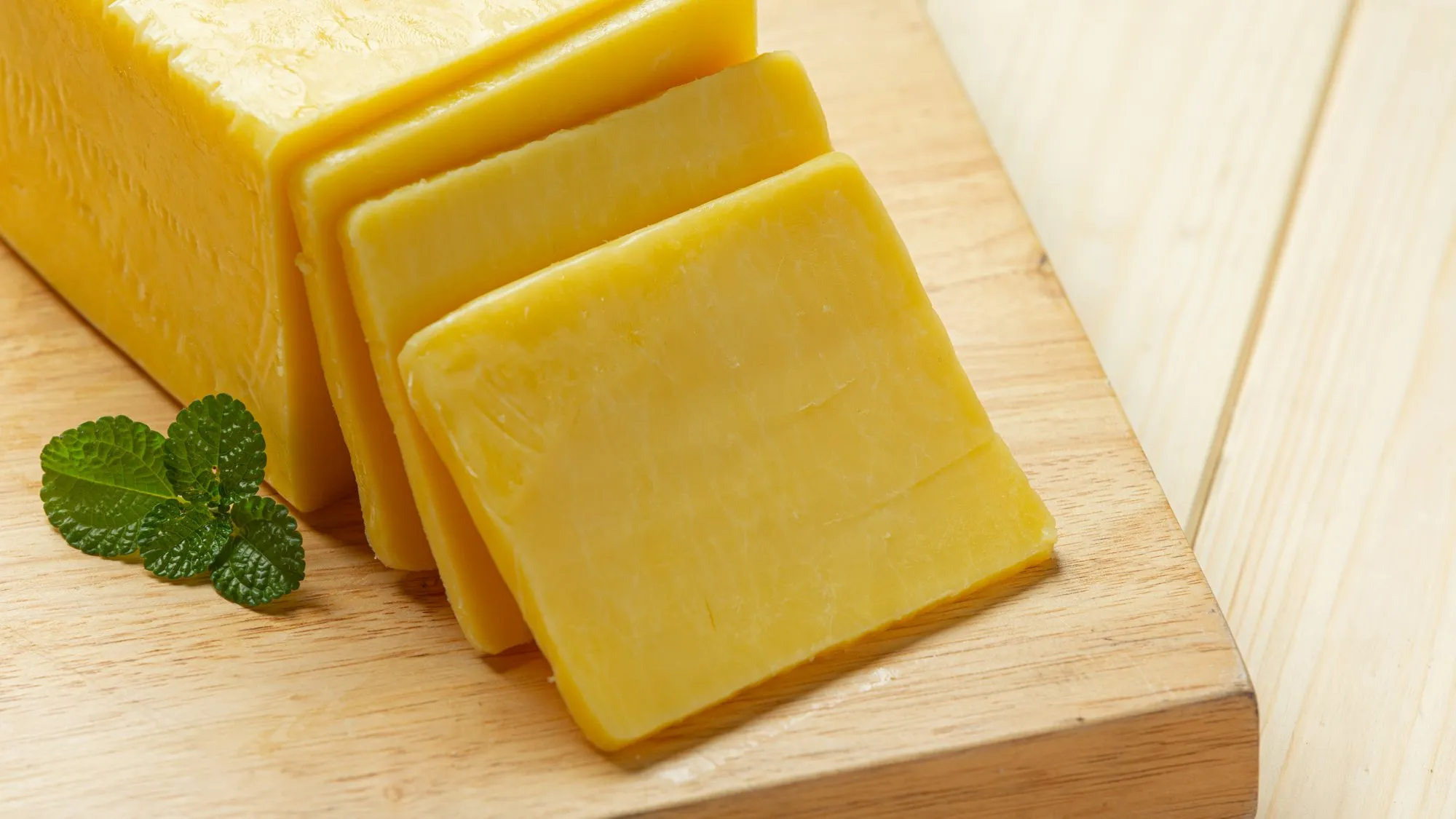
Yes, you can freeze cheese, but only some kinds freeze well. Hard and semi-hard cheeses such as cheddar, Swiss and Parmesan keep their flavor in the freezer for about 6 months, though they usually turn crumbly and are harder to slice.
Soft cheeses, cream cheese, cottage cheese and ricotta lose much more of their texture, so they’re better kept in the fridge. Freezer times are about quality, not safety: food held at 0°F stays safe, but the texture and flavor slowly change.
Key takeaways
- Hard and semi-hard cheeses freeze best. Expect a drier, more crumbly texture with the flavor mostly intact.
- Freeze cheese in pieces of about ½ pound or smaller, wrapped tightly in moisture-resistant packaging.
- Thaw cheese in the refrigerator and use it soon after, ideally in cooked dishes.
- Soft cheeses, cream cheese, cottage cheese, ricotta and processed slices don’t freeze well.
- Frozen cheese is for melting, grating and baking, not for a cheese board.
Which cheeses freeze well (and which don’t)
Cheese that is firm and low in moisture holds up best, because there is less water to form ice crystals that break up the texture. These are the guidelines from university extension services, with the most cautious figure used where they differ.
| Cheese | Does it freeze well? | Freezer time for best quality | What to expect after thawing |
|---|---|---|---|
| Hard cheese (cheddar, Swiss, Parmesan, Romano, provolone) | Yes, the best choice | Up to 6 months | Crumbly and a little dry, but the flavor holds up |
| Semi-hard cheese (Edam, Muenster) | Yes | Up to 6 months | Crumbly and mealy, harder to slice |
| Shredded cheese (young cheddar, mozzarella, shredded Parmesan) | Yes | 3 to 4 months | Works well in cooked dishes |
| Soft cheese (Brie, Camembert, Bel Paese) | Not as well as hard cheeses | Up to 6 months, but not recommended for serving as is | Texture suffers; use it cooked |
| Cottage cheese, ricotta | No | Avoid; if you must, about 1 month | Watery or separated |
| Cream cheese | No | Avoid; freezing works for cooking only (see below) | Grainy and crumbly |
| Processed cheese slices | Not recommended | Sources disagree, so skip it | Texture changes |
The sources don’t agree on a few of these. The National Center for Home Food Preservation and the UC Master Food Preservers say cream cheese, cottage cheese and ricotta do not freeze well, while North Dakota State University says cottage cheese and ricotta can be frozen for about a month and that processed cheese products usually freeze fine. Because the answers differ, this article calls those cheeses a poor bet and recommends the fridge instead.
Both the National Center for Home Food Preservation and UC list 6 months for soft cheese such as Brie, but UC adds that soft cheeses generally don’t freeze as well as hard ones. If you freeze a soft cheese, plan to cook with it.
Cream cheese is a special case
Cream cheese doesn’t freeze well on its own. The National Center for Home Food Preservation says that cream cheese blended with heavy cream can be frozen for later use in dips or as icing on frozen sandwich loaves. NDSU also says frozen cream cheese is fine for cooking, dips or icing, where the change in texture doesn’t matter.
Why freezing changes cheese
Cheese is mostly protein, fat and water. When it freezes, the water forms ice crystals that push the protein structure apart. On thawing, hard cheese ends up drier and more brittle, which is why it crumbles instead of slicing cleanly. The higher the moisture, the bigger the effect, which is why soft cheeses and cottage cheese turn watery or grainy.
The flavor, on the other hand, usually survives. NDSU says frozen hard cheese is crumbly and a little dry but tastes just as good as fresh cheese. That makes frozen cheese a good fit for anything you’ll melt, grate or bake.
How to freeze cheese
- Start with fresh cheese. Freeze it while it’s still well within its fridge life, because freezing keeps cheese as it is and doesn’t improve it.
- Cut it into small pieces. Extension guidance is to cut blocks into chunks of about ½ pound or smaller. Smaller pieces freeze and thaw faster, which helps the texture. The National Center for Home Food Preservation allows pieces of up to about 1 pound, but smaller pieces are the more cautious choice.
- Wrap it tightly. Use moisture-vapor-resistant packaging: wrap each chunk in plastic wrap, foil or freezer wrap, then put the wrapped pieces in a freezer bag and press out the air.
- Shredded cheese. Freeze it in meal-size portions in freezer bags so you can pull out what you need. A quick shake before it freezes solid helps keep the shreds from clumping.
- Label it. Write the type of cheese and the date on each package.
- Keep the freezer at 0°F. A freezer thermometer is the only way to check.
For cheese food products such as sauces, dips and processed cheese, NDSU suggests testing first: freeze a small amount, thaw it after 24 hours, and freeze the rest only if you like the result.
How to thaw frozen cheese
Thaw cheese in the refrigerator, not on the counter. Slow thawing keeps the cheese cold the whole time and helps limit the crumbling.
- Blocks and chunks: leave them wrapped in the fridge until soft, which can take several hours to overnight depending on the size.
- Shredded cheese: UC recommends thawing it in the fridge for 24 to 48 hours so the moisture can go back into the cheese.
- Use it soon. Extension sources say to use thawed cheese as soon as possible. NDSU also says not to refreeze it.
Frozen cheese is at its best melted, grated or baked: on pizza, in casseroles, macaroni and cheese, quesadillas, soups and sauces. It’s less suited to slicing for sandwiches or serving cold on a board.
How long cheese keeps in the fridge
Cheese keeps best in the refrigerator, and freezing is only a backup. Keep the fridge at 40°F or below, which is the FDA’s recommended temperature.
| Cheese | Refrigerator (40°F or below) | Room temperature |
|---|---|---|
| Hard cheese (cheddar, Swiss), opened | 3 to 4 weeks | No more than 2 hours (1 hour above 90°F) |
| Soft cheese (Brie, feta), cottage cheese, ricotta | About 1 week | No more than 2 hours (1 hour above 90°F) |
| Other cheeses | Follow the date on the package | No more than 2 hours (1 hour above 90°F) |
These fridge times are from Clemson Cooperative Extension. The room-temperature row follows the FDA’s guideline for foods that need refrigeration, which is no more than 2 hours, or 1 hour if the air temperature is above 90°F. It is the cautious figure, and it applies to every type of cheese on the table.
Signs cheese has gone bad
Look at the cheese before you use it, whether it was in the fridge or the freezer.
- Mold on hard cheese. FSIS says you can cut off at least 1 inch around and below the mold spot, keeping the knife out of the mold itself, then re-wrap the cheese in fresh wrap.
- Mold on soft, shredded, sliced or crumbled cheese. Throw it away. FSIS lists cream cheese and cottage cheese as discard-if-moldy too.
- A slimy surface, a sour or off smell, or a bad taste. Throw the cheese away.
- Past its fridge window. If you’re not sure how long it has been open, don’t risk it.
Frequently asked questions
Can you freeze cheddar cheese?
Yes. Cheddar is one of the best cheeses to freeze. Cut it into pieces of about ½ pound or smaller, wrap it tightly, and use it within about 6 months. It will be crumbly when it thaws, so use it grated or melted.
Can you freeze shredded cheese?
Yes. UC says shredded cheeses such as young cheddar, mozzarella and shredded Parmesan can be frozen for no more than 3 to 4 months. Thaw it in the fridge for 24 to 48 hours.
Can you freeze cream cheese?
Not on its own. It turns grainy and crumbly. If you want to freeze it, blend it with heavy cream first and use it in dips or icing, as the National Center for Home Food Preservation suggests.
Can you freeze cottage cheese or ricotta?
It isn’t recommended. The National Center for Home Food Preservation and UC both say cottage cheese and ricotta don’t freeze well. NDSU says they can be frozen for about a month, but that cream-style cottage cheese may separate when thawed. Use them in cooked dishes if you do freeze them.
Can you freeze Brie or other soft cheeses?
You can, but they don’t freeze as well as hard cheeses and the texture suffers. UC and the National Center for Home Food Preservation list up to 6 months in the freezer. Plan to cook with it, not serve it cold.
Does frozen cheese melt properly?
Generally yes. Frozen and thawed hard cheese keeps its flavor and melts fine in cooked dishes. It’s the slicing and cold-serving texture that suffers.
Is it safe to eat cheese that was frozen?
Yes, cheese kept at 0°F or below stays safe. Freezer times are about quality only. Thaw it in the fridge and use it soon after.